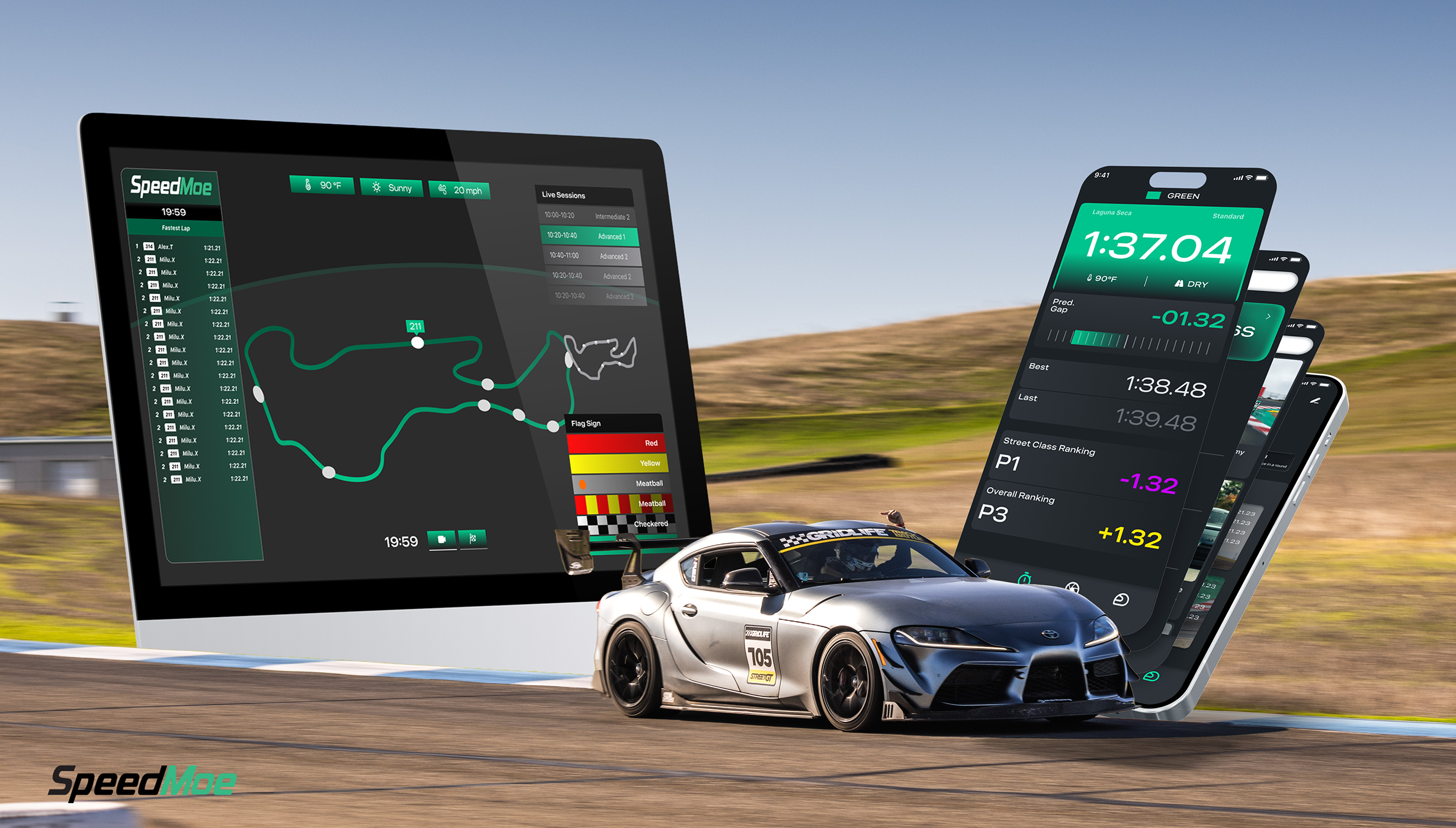
SpeedMoe

Focus stays on safe and engaging driving experience.

Landing detail

MOBILE VERSION UNDER CONSTRUCTION

PLEASE MOVE TO PC VERSION

THANK YOU!

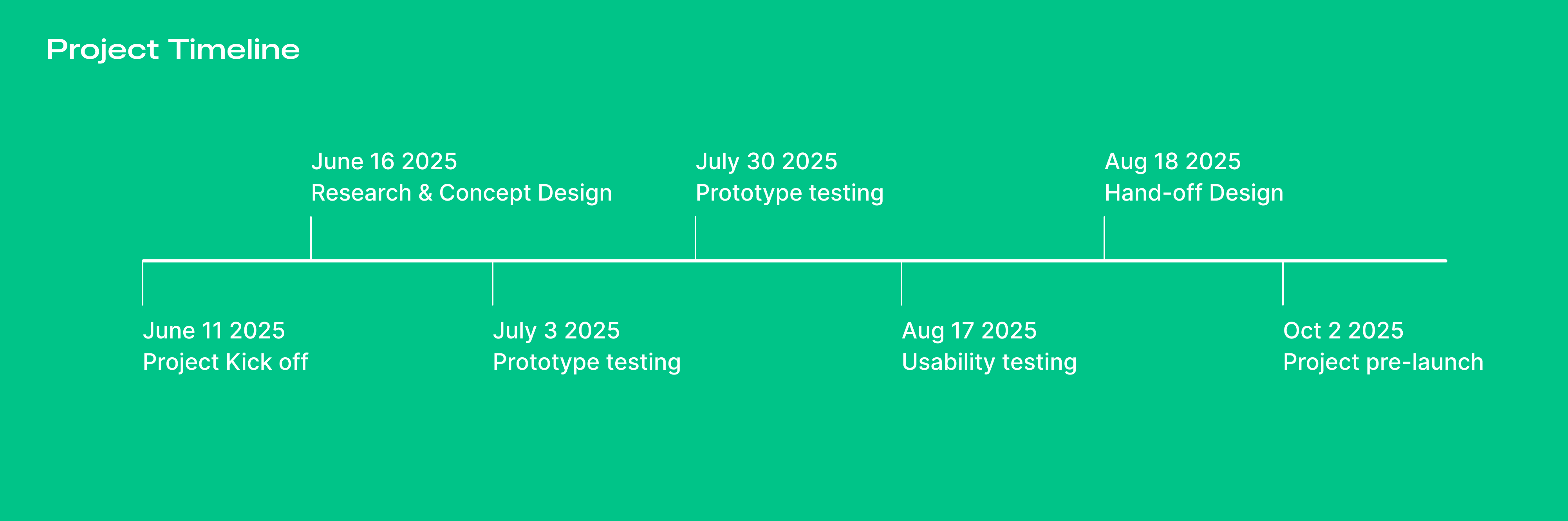
JUNE 2025-

SEPT 2025

Spencer Qiao (Design Lead)

James Cao (Project Manager)

Alex Tanaka (Engineer)

Essie Cao (Developer)

Shang Gao (Developer)

Ethen A (Developer)

Mike Wang (Designer)

We interviewed a selected group of drivers from various backgrounds to explore their experiences in more depth.

User Research

My project hero

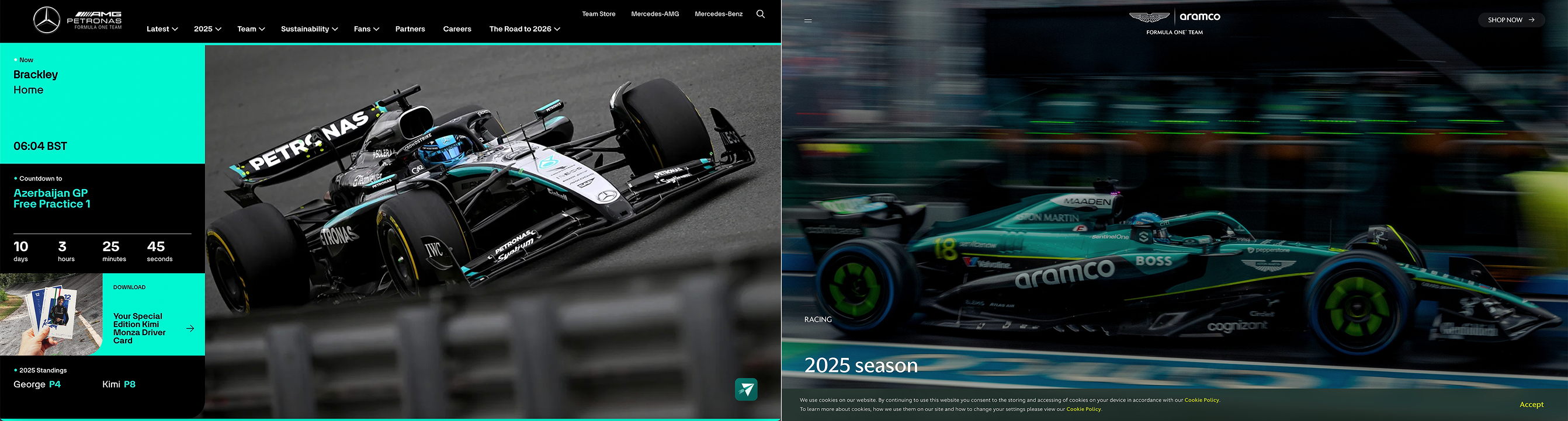
Competitive Analysis

My project hero

Our competitive products are either hardware or personal timing tools, or result-viewing/social platforms. None of them combine organizer operations, driver collaboration, data-driven grouping, and safety with engagement into a unified ecosystem; as a result, they cannot fundamentally improve grassroots track day efficiency, on-site safety, or long-term community growth.

Data Management

Centralized racer data enables fairer grouping, clearer insights, and more efficient event planning.

Weak organizer tools

No app supports driver grouping, safety management, or event operations end-to-end.

Dark theme dominant

Most competitors default to dark UI, aligning with in-car/track environments and driver preference.

Insights of Improvement

Data Management

Centralized racer data enables fairer grouping, clearer insights, and more efficient event planning.

Pace Control

Pace control balances competition and safety by reducing speed gaps and improving on-track experience.

Brainstorming

Analysising User needs

My project hero

What makes our product attractive

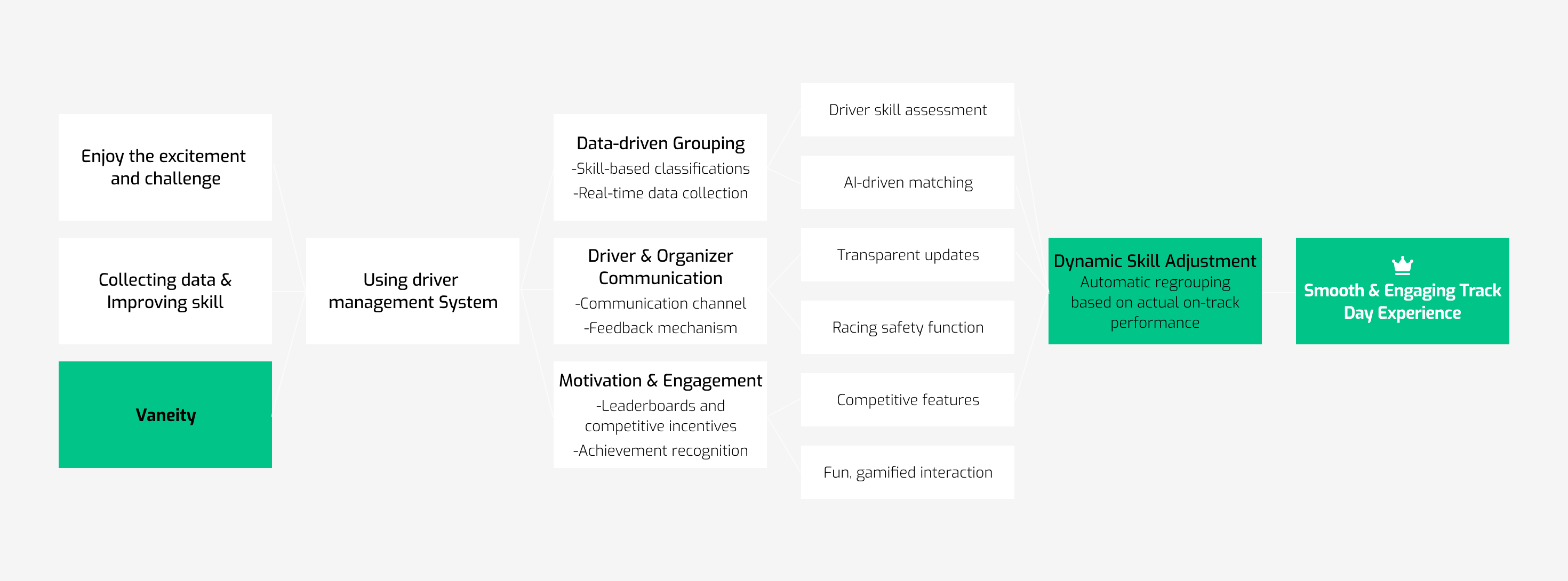
Leverage real-time feedback, playful challenges, and social visibility to keep users engaged, motivated, and feeling seen.‍‍Gamify progress tracking → turn steps from registration to racing into dynamic goalsLive feedback loop → drivers & organizers stay connected‍Enable social comparison → rankings, challenges, rivals→ Maybe expand into community features & collaborate with brands?

Product detail

Storyboard

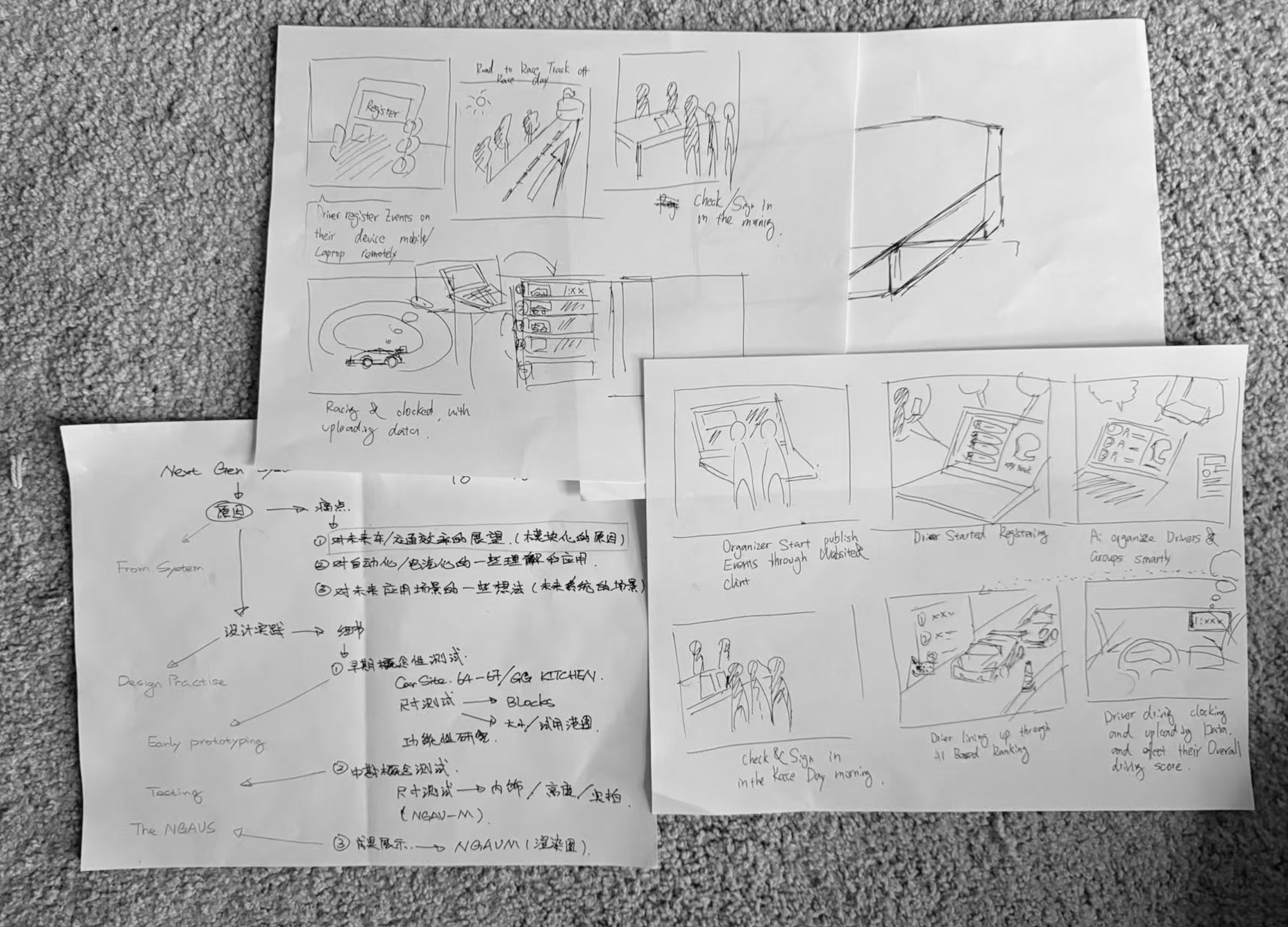
This storyboard maps the full user journey and highlights how our app enhances the track day experience—while generating potential income through service integration and smart user targeting.

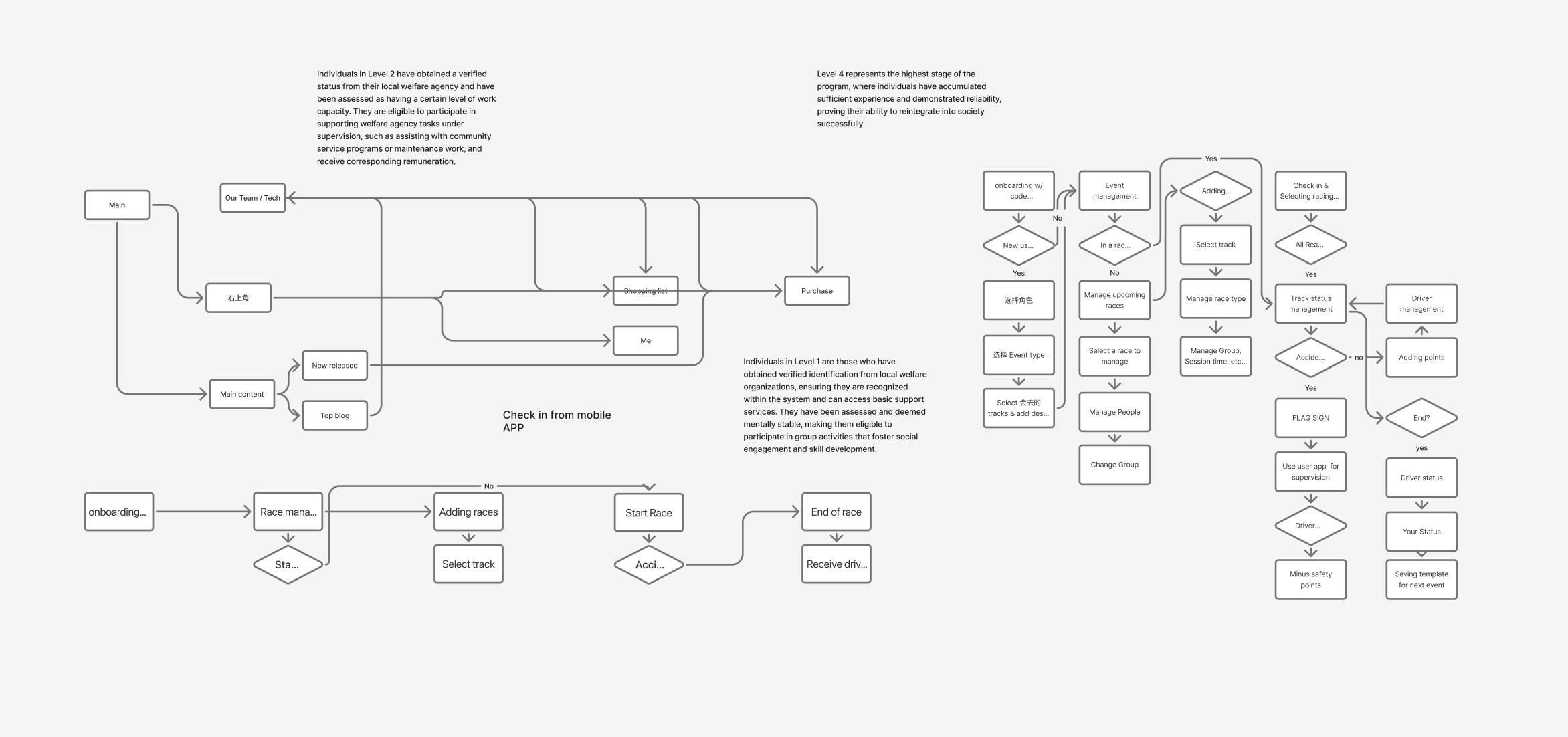
Flow chart

My project hero

Wireframe

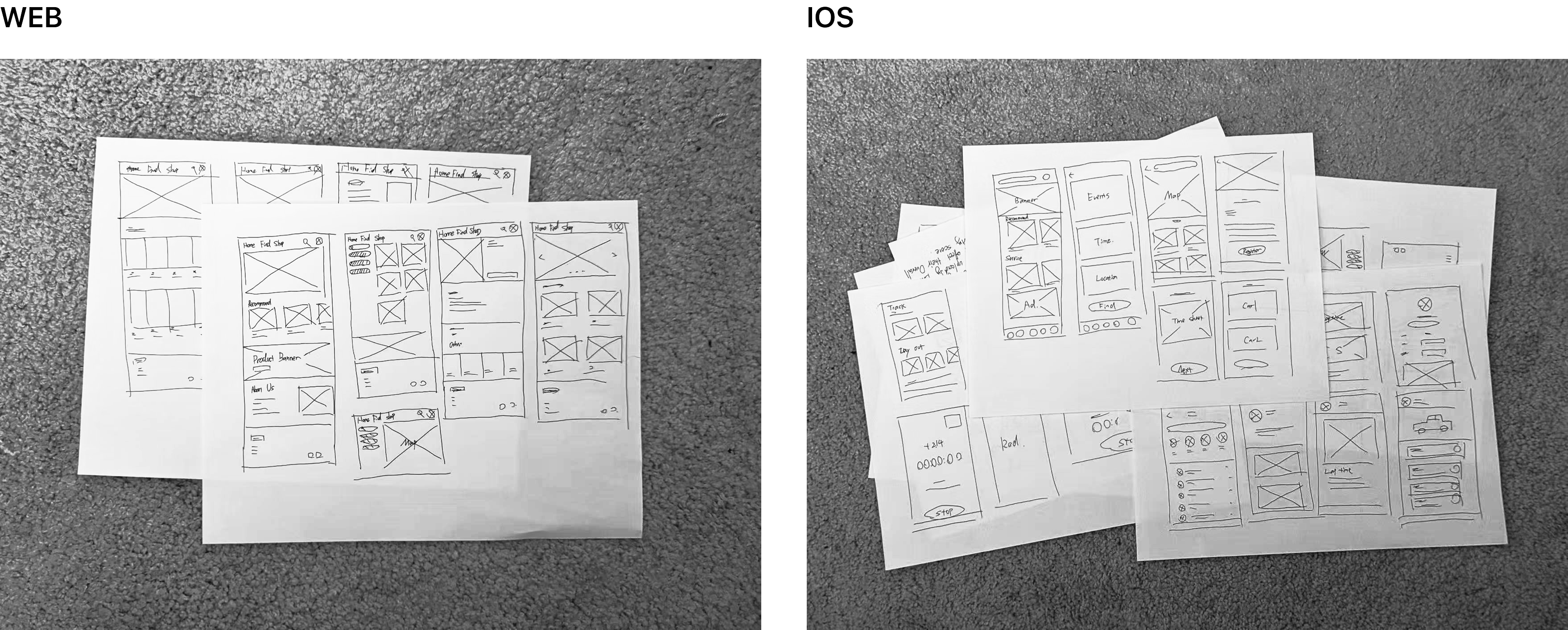
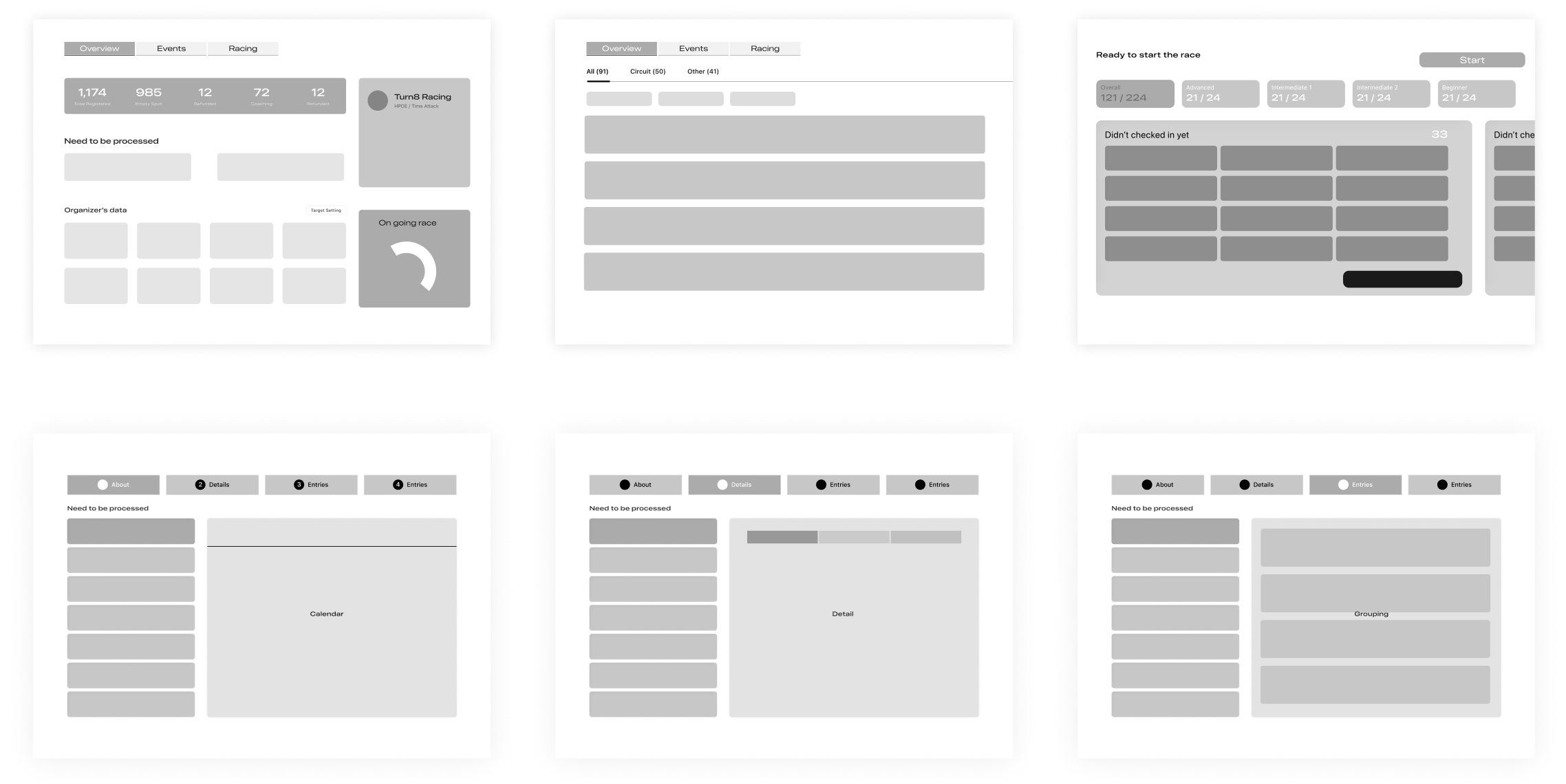
Low-fidelity prototypes were created using quick sketches and wireframes to explore core user flows and test interaction concepts. This stage focused on validating ideas and usability at low cost, enabling fast iteration before moving into detailed visual design.

My project hero

Design Iterations

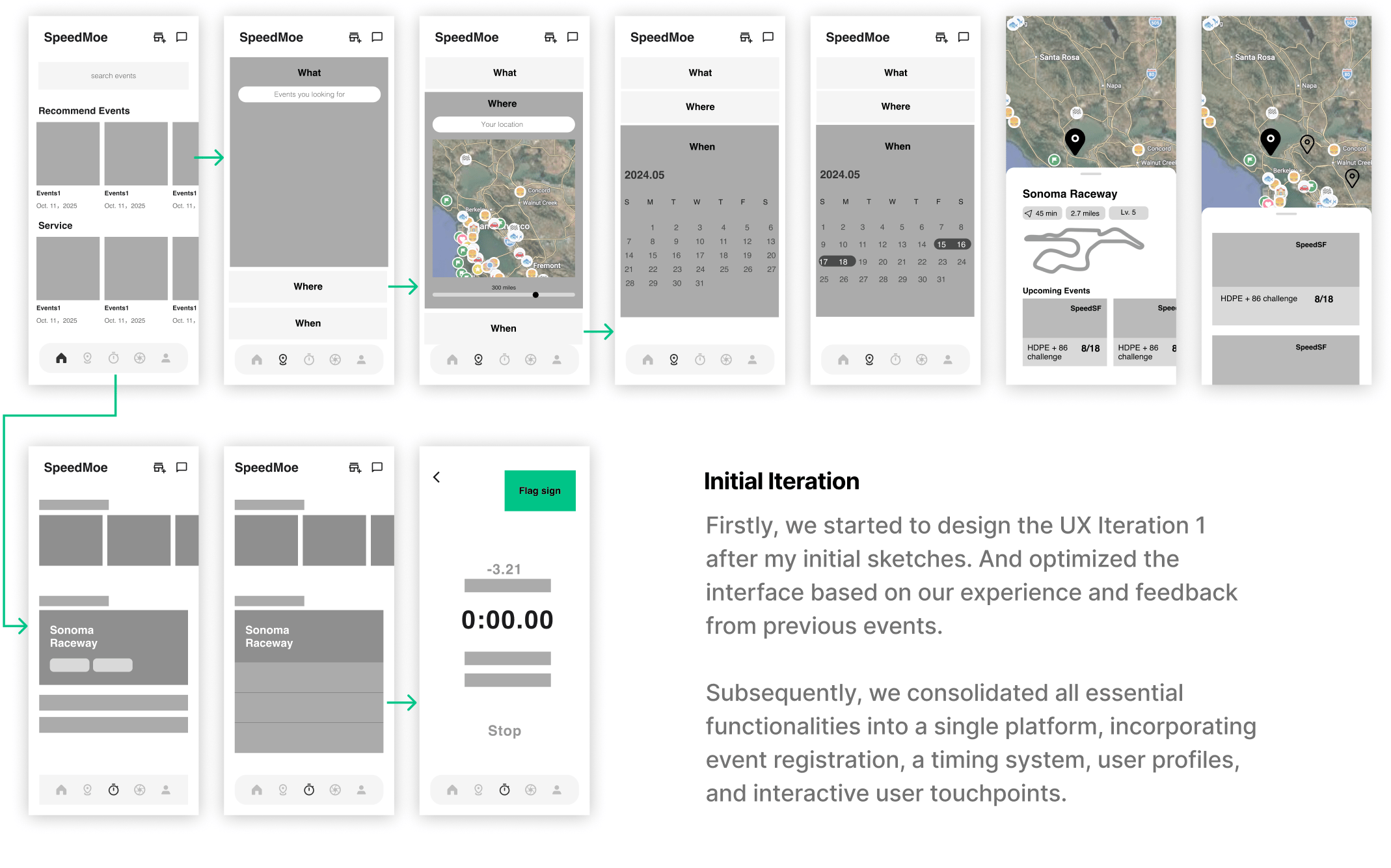
Initial Iteration

Firstly, we started to design the UX Iteration 1 after my initial sketches. And optimized the interface based on our experience and feedback from previous events.

Safety issue during the testing

Testing

We invited 10 Participants to test our prototype 1 and we received two key pieces of feedback:1. As a motorsport-related app, it lacks excitement and distinctiveness—it needs a cooler, more engaging appeal.2. The website flow is overly complicated and should be streamlined for easier navigation.3. We need a B-side platform for organizers to control registration, grouping, scheduling, and safety, fully connected to the user-facing web and mobile app.

We took their feedback seriously and made several key changes. In the app, we introduced motorsport-inspired elements such as carbon fiber textures and racing-themed visuals to enhance the overall vibe. We explored several design variations and ultimately selected the one that felt the boldest and most dynamic. At the same time, we refined the overall UI and simplified the user flow to make the experience smoother and more intuitive.

Analysising User needs

Variations

My project hero

Analysising User needs

Considering the Organizer's System's Function

When we shared our concept with event organizers, they showed strong interest in the platform and expressed a desire to collaborate more deeply. They saw the potential of the system to improve on-site operations and strengthen communication with drivers, which motivated us to move forward in close partnership with them.

Analysising User needs

My project hero

Analysising User needs

Initial V1 UI

When we shared our concept with event organizers, they showed strong interest in the platform and expressed a desire to collaborate more deeply. They saw the potential of the system to improve on-site operations and strengthen communication with drivers, which motivated us to move forward in close partnership with them.

Analysising User needs

My project hero

Analysising User needs

Testing and Refinement

On-site Testing

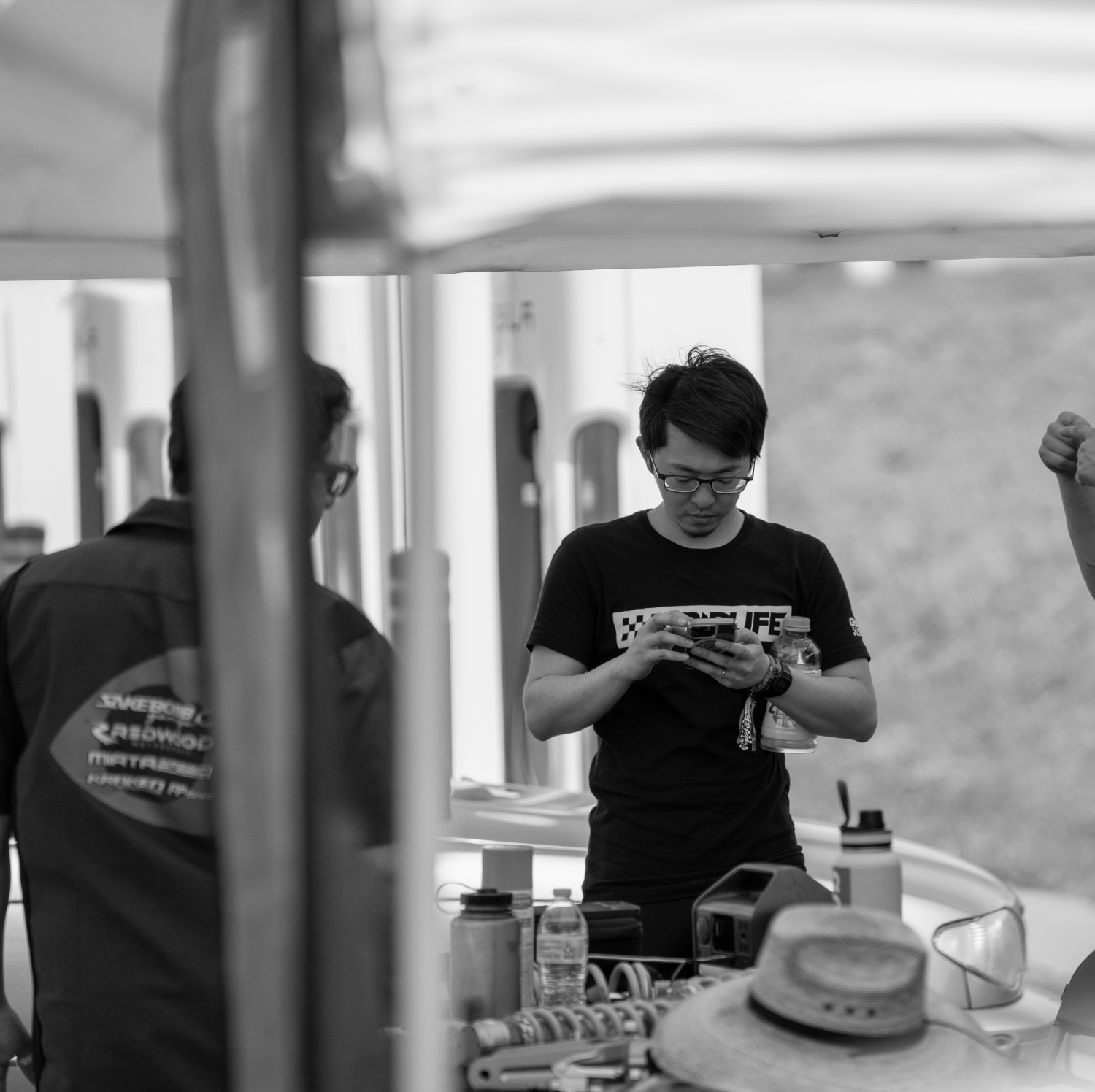
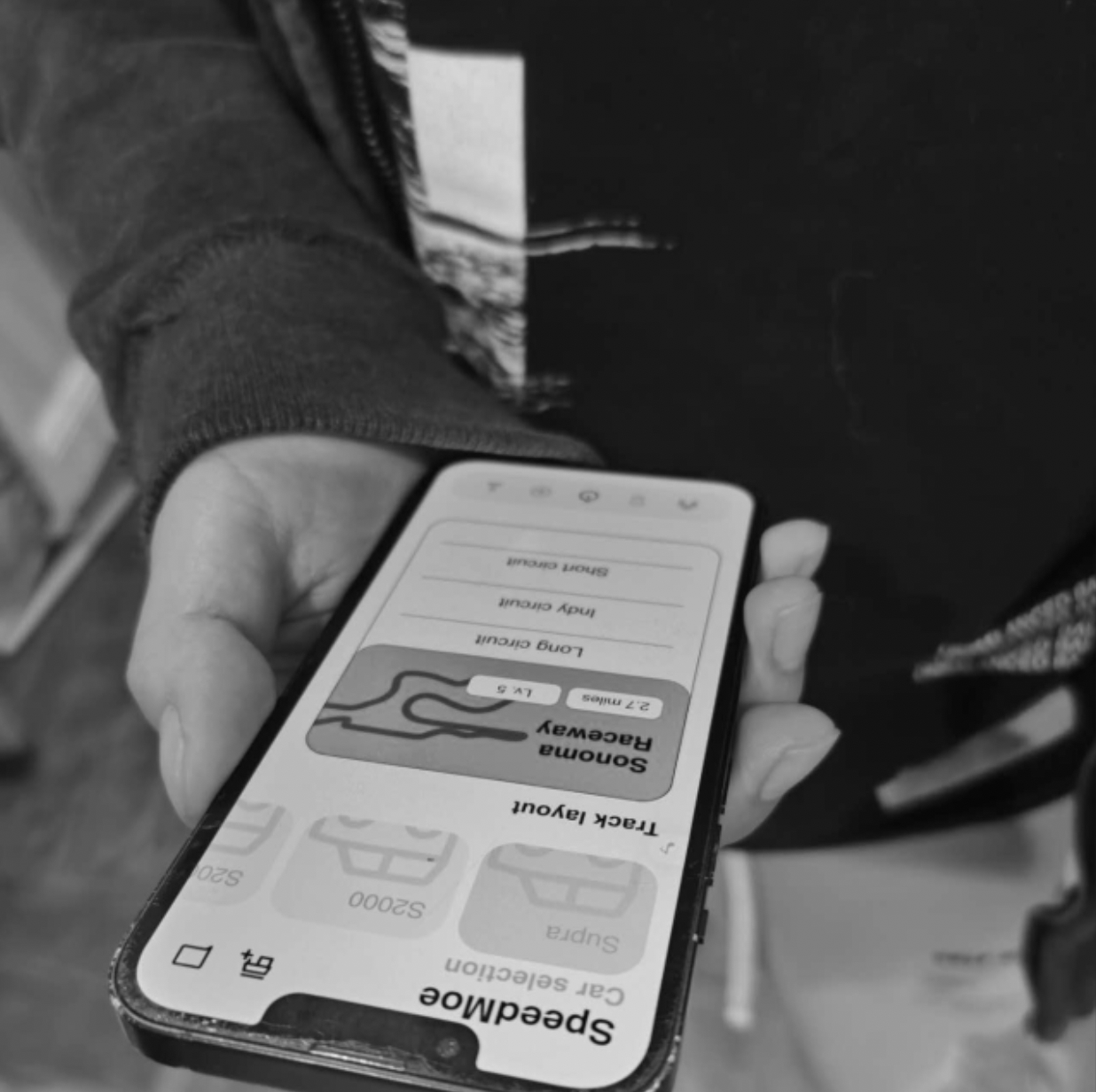
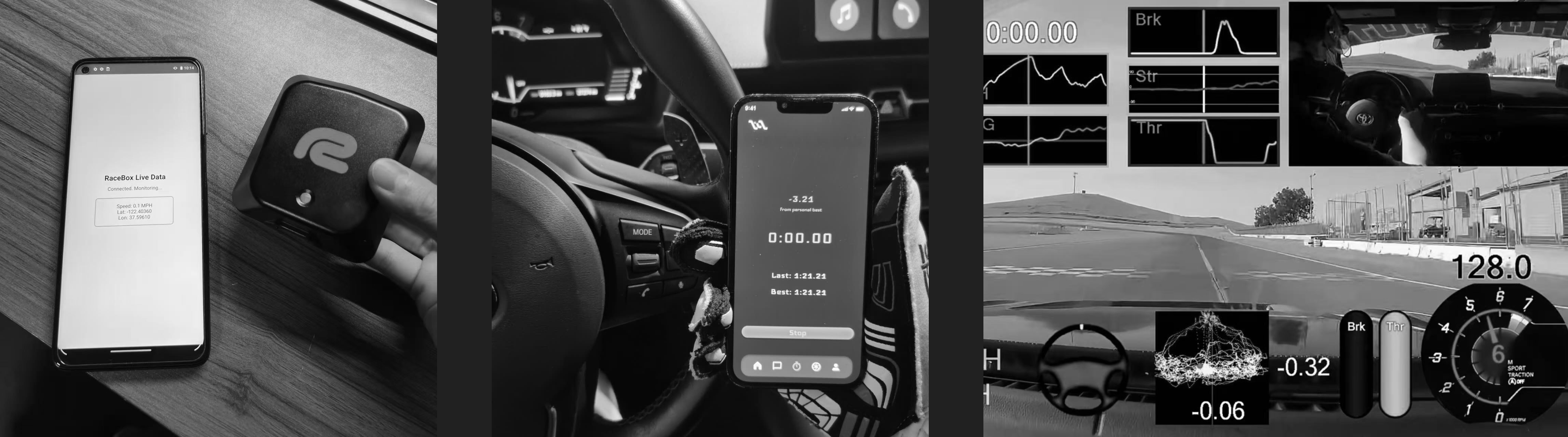
We used RaceBox as our base device to begin on-site testing. This allowed us to verify that the data could be accurately captured and effectively integrated into our system. At the same time, we observed how users interacted with the app in real track conditions to evaluate the overall user experience and identify areas for improvement.

Analysising User needs

My project hero

Analysising User needs

Emergency Signal

The simulated red flag (emergency)  wasn’t prominent enough, making it hard for users to notice during sessions.

Usability

The timing button was too small and difficult to operate while wearing gloves.

Better Analyze

The organizers need a more integrated website to control the drivers, and they also need templates to analyze things.

Timing Refinement

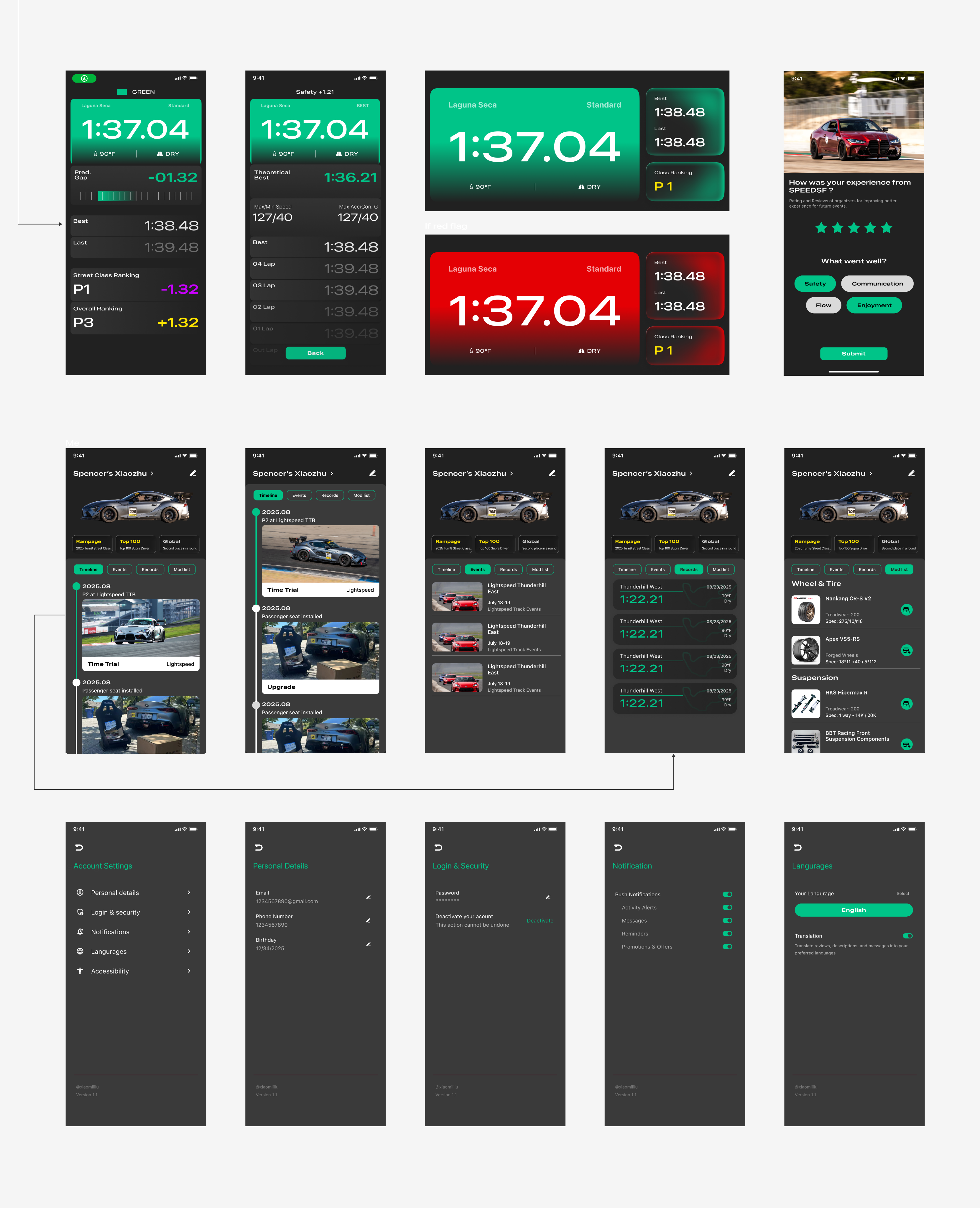
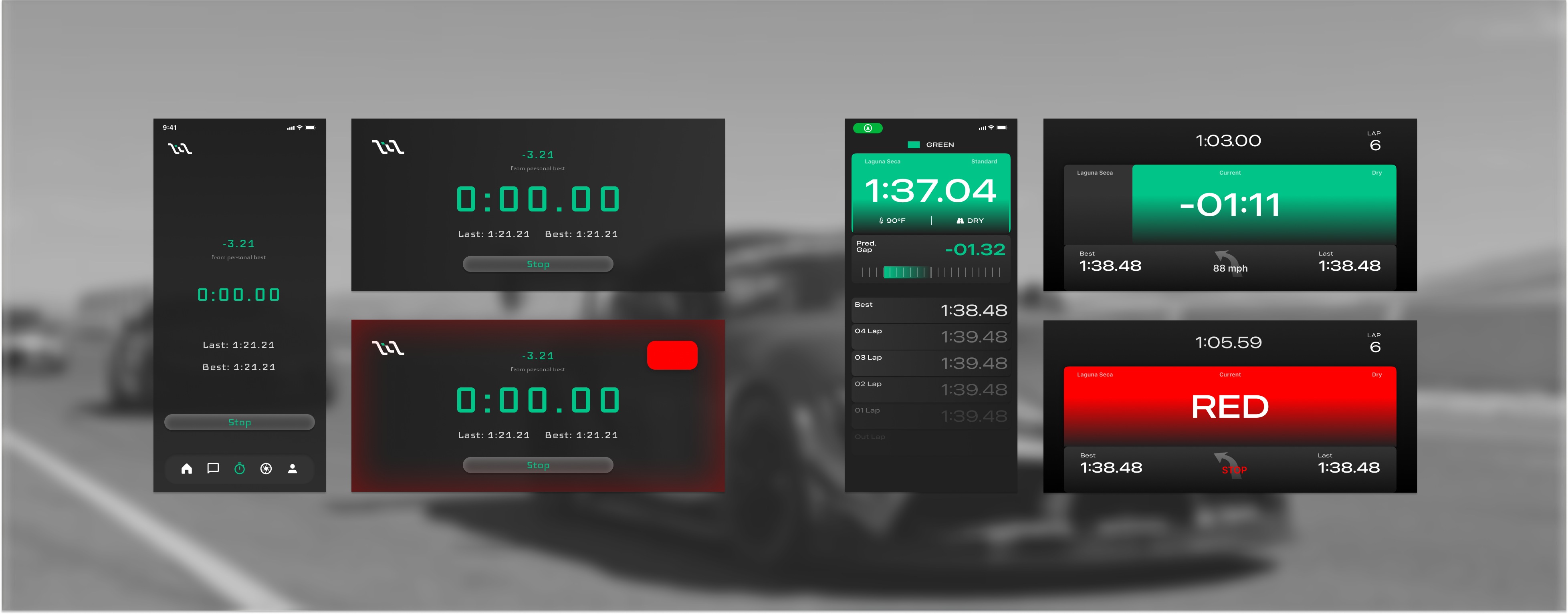
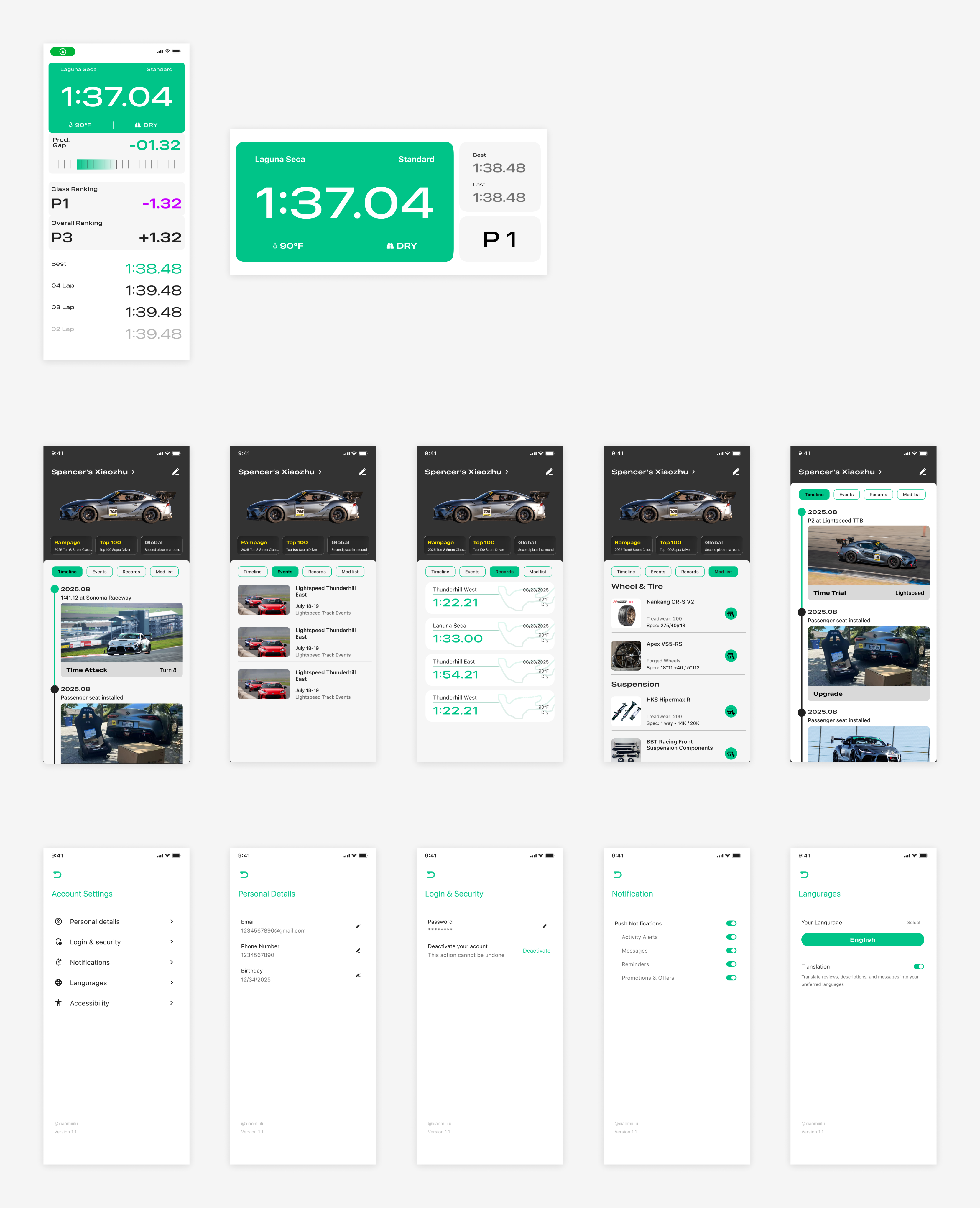
Based on user feedback, we made several key improvements to the timing interface. We enlarged the timing button to accommodate gloved hands and removed the bottom navigation bar during active sessions to avoid accidental touches. Now, after pressing "Stop," users are taken directly to the analysis screen, ensuring a smooth and focused experience.

Analysising User needs

My project hero

Analysising User needs

Emergency (Red Flag) Design

In the event of a dangerous situation on the track, a red flag will appear on the screen. To ensure drivers notice it immediately, we implemented a flashing alert that blinks several times before transitioning into the previously designed breathing animation. This combination enhances visibility without being overly distracting during high-focus driving moments.

Integrate AI into the system

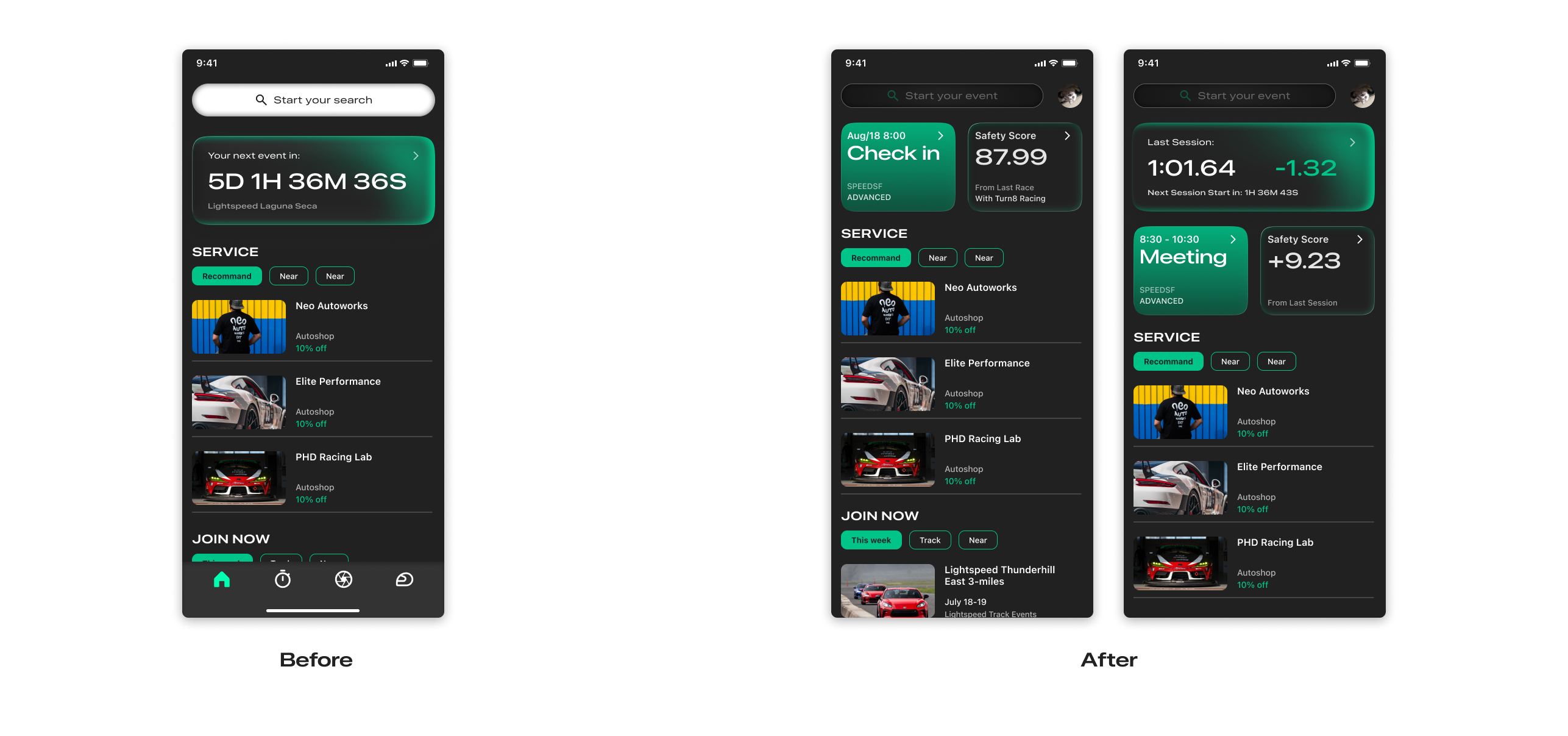
Instead of a static menu, the homepage will dynamically adapt using AI. Based on user data—such as track day performance, real-time conditions during events, and the time since or until their next track day—the system will deliver tailored homepage pushes that keep the experience relevant and engaging.

My project hero

Organizer's feature update

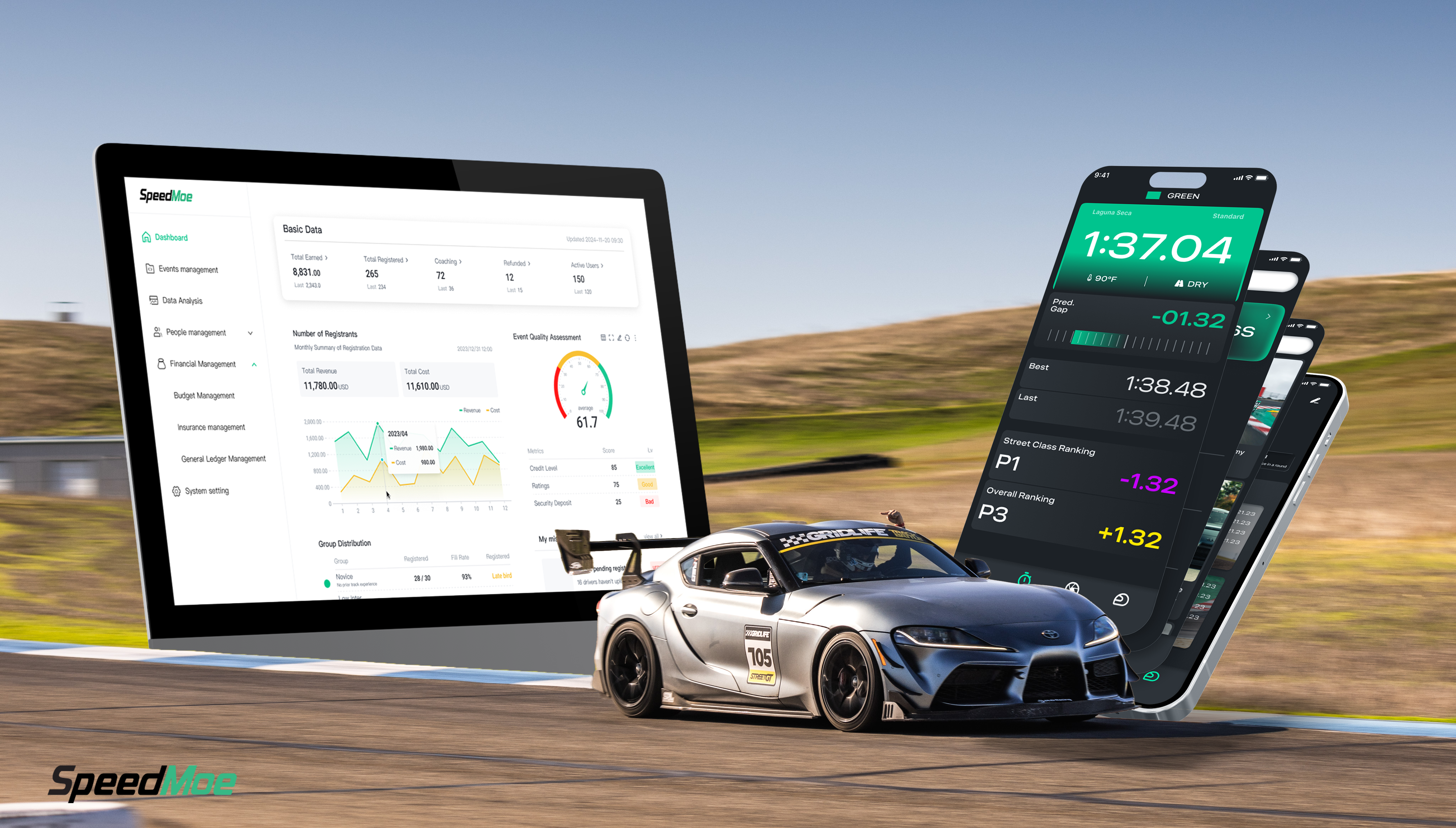
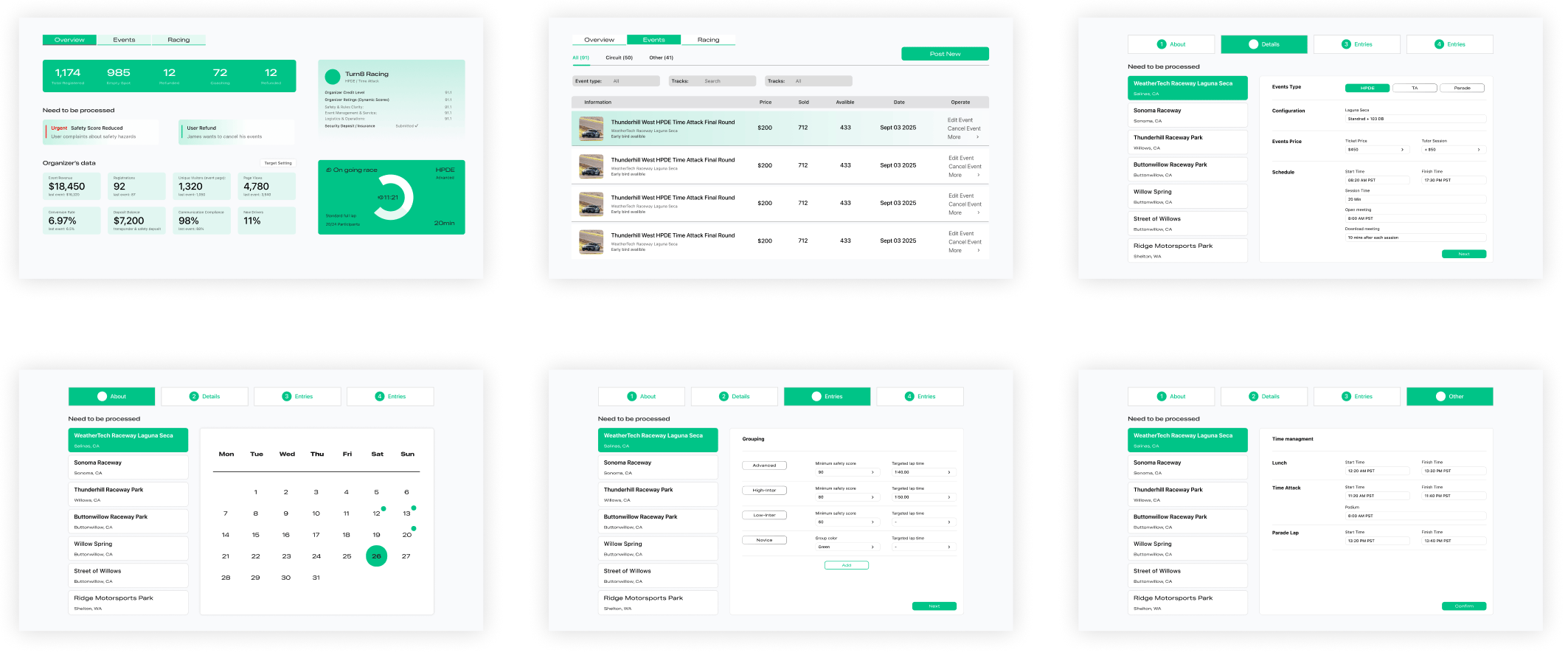
We need a B-side platform for organizers to control registration, grouping, scheduling, and safety, fully connected to the user-facing web and mobile app; for organizers, we have standardized the staff management list and operation pages, making everything more streamlined and accessible.

My project hero

Refocusing Resources: Discontinuing the C-side Website

After balancing development time and resources, and following careful evaluation through multiple usability and performance tests, we decided to discontinue the C-side website in order to focus on delivering a more efficient and optimized product experience.

Branding Design

Visual Guidelines

Color Plate

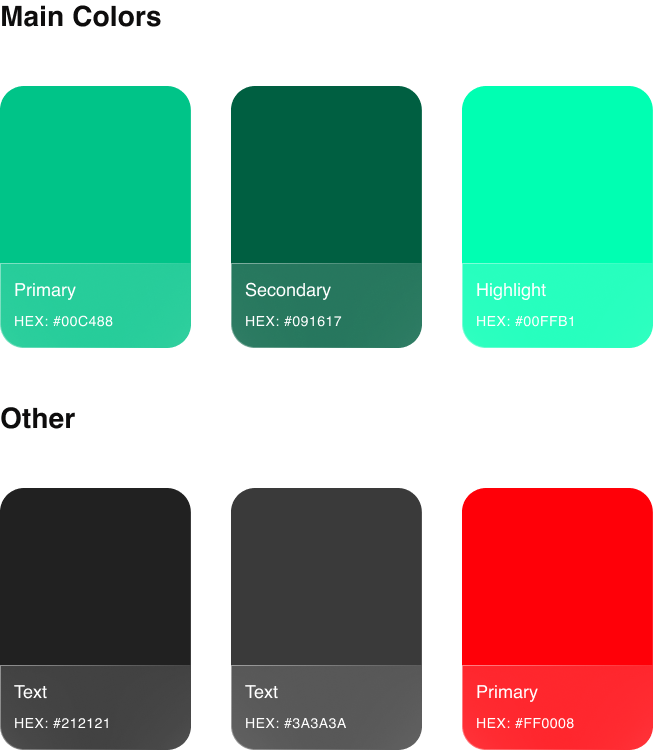
We chose a dark gray and green color palette to evoke a sense of technology, precision, and motorsport intensity.

Theme color Inspiration

After balancing development time and resources, and following careful evaluation through multiple usability and performance tests, we decided to discontinue the C-side website in order to focus on delivering a more efficient and optimized product experience.

My project hero

Logo Design

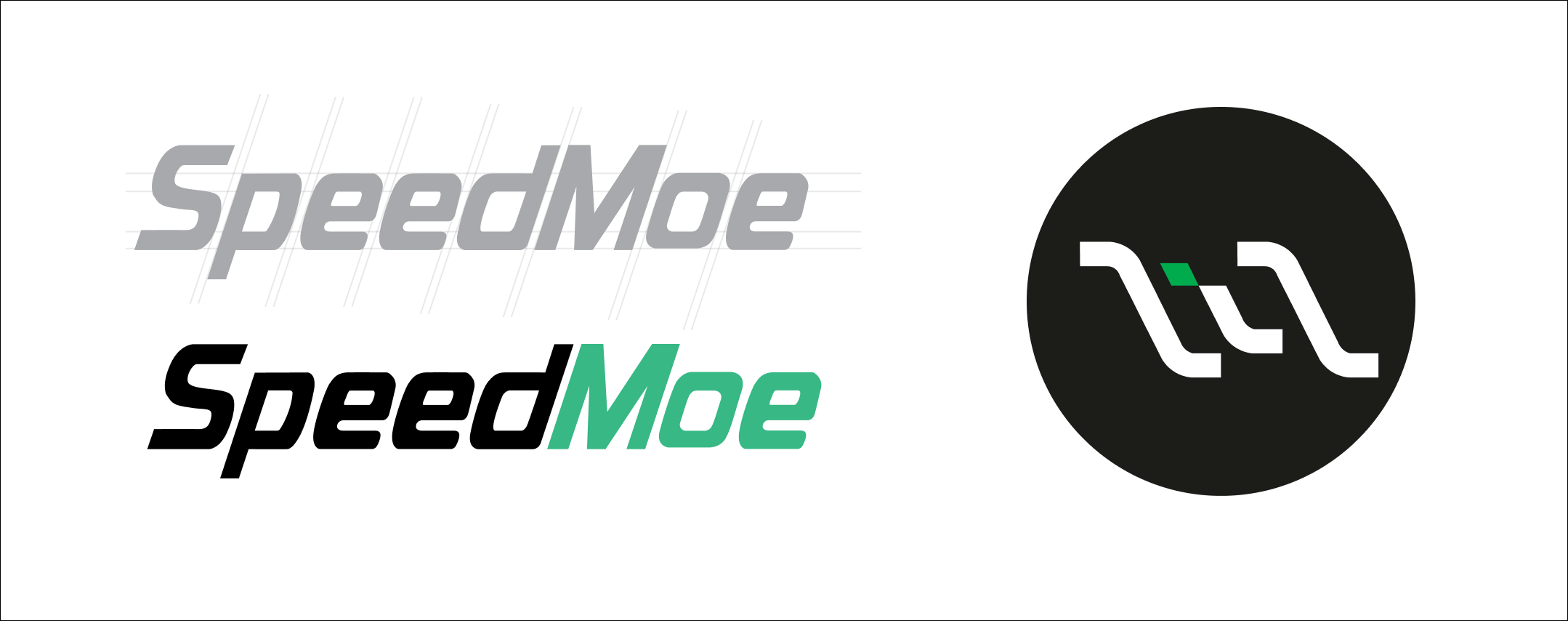
We combined the racing flag with the letter "M" to create a simple, bold logo. It’s designed for versatility—easy to use in apps, print, and even making it noticebale on all kinds of sponsored car liveries in differnt color.

My project hero

HIGH-FIDELITY PROTOTYPE

Final UX Flow Overview

(Web + App + Track Integration)

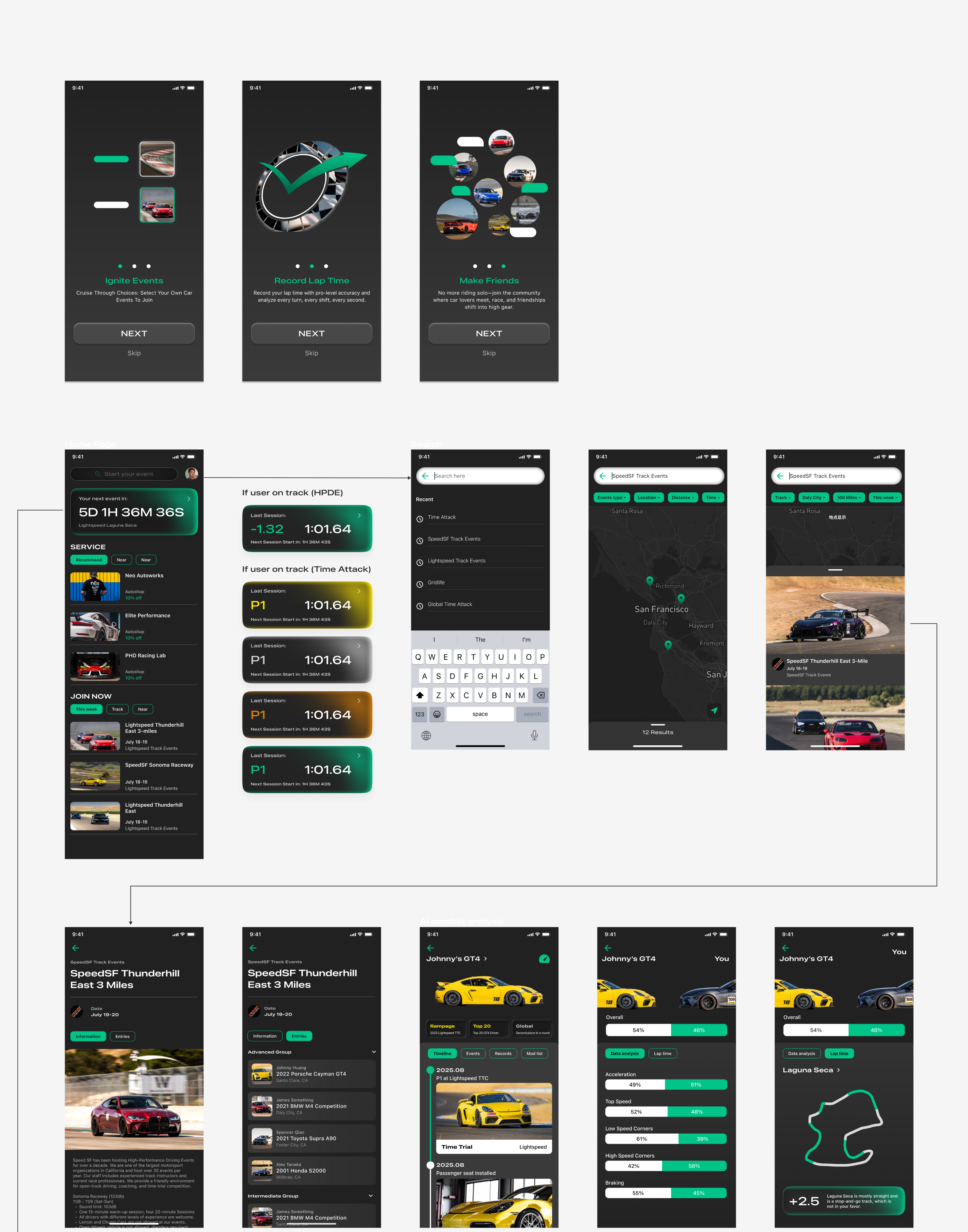
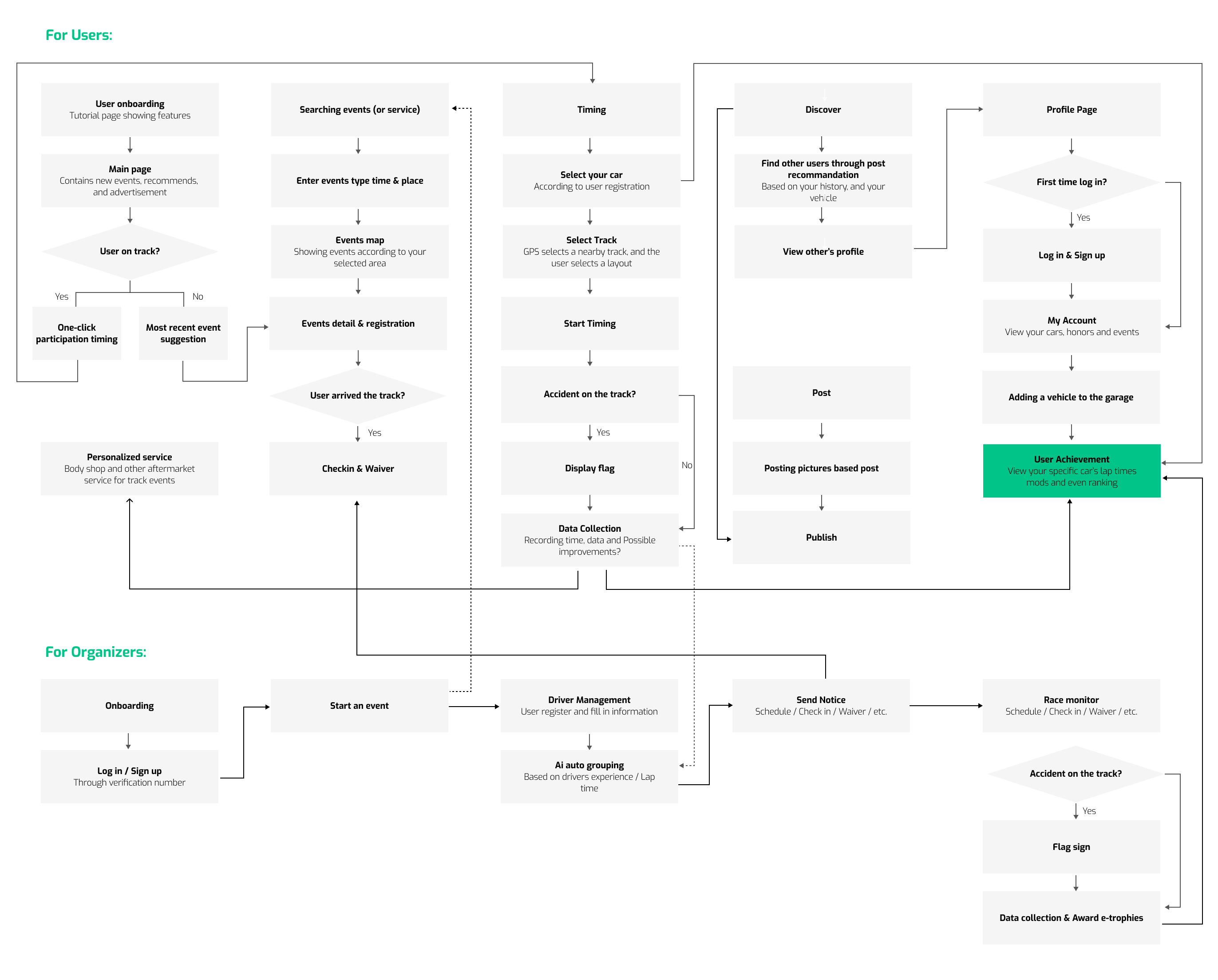
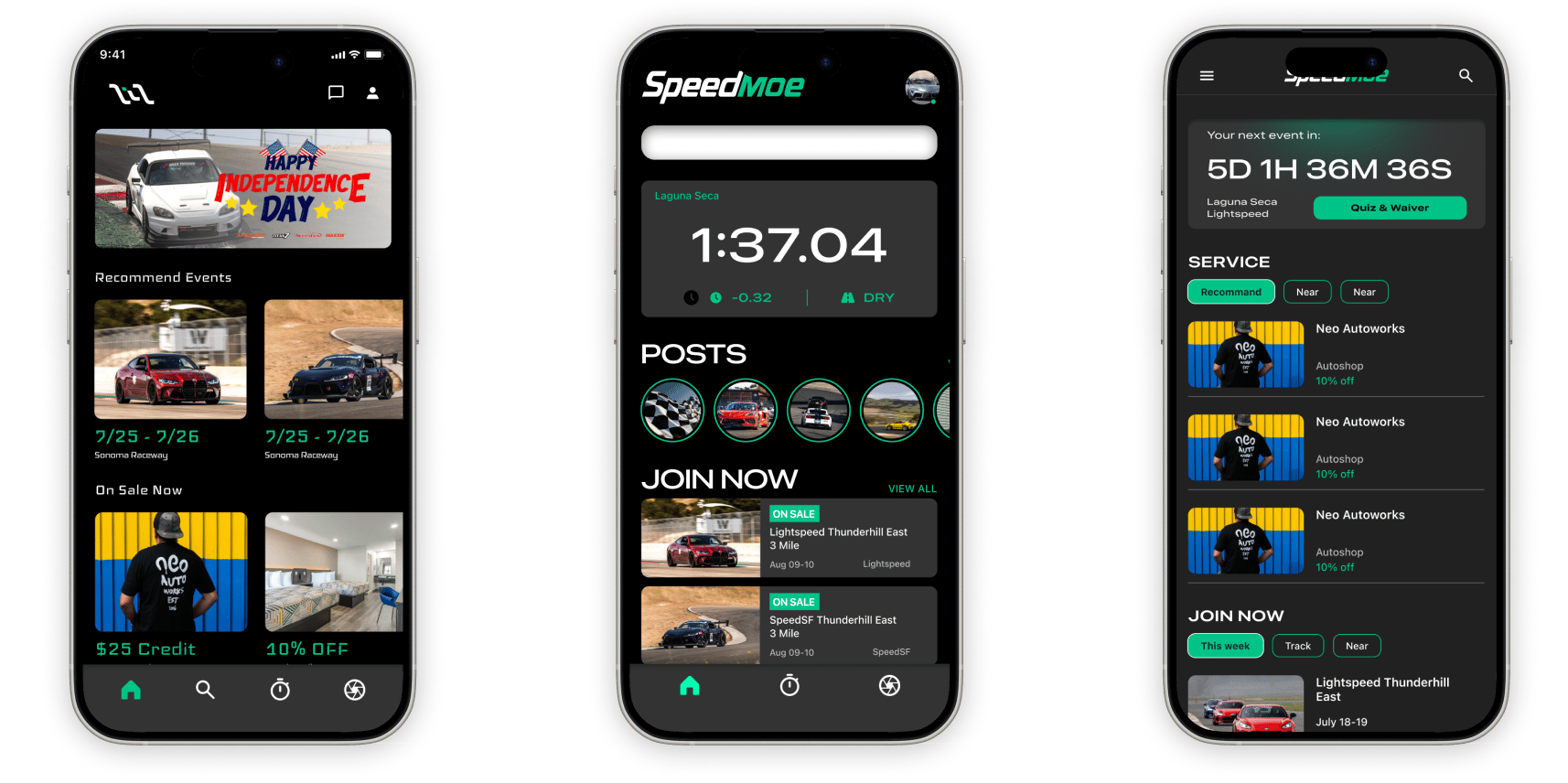
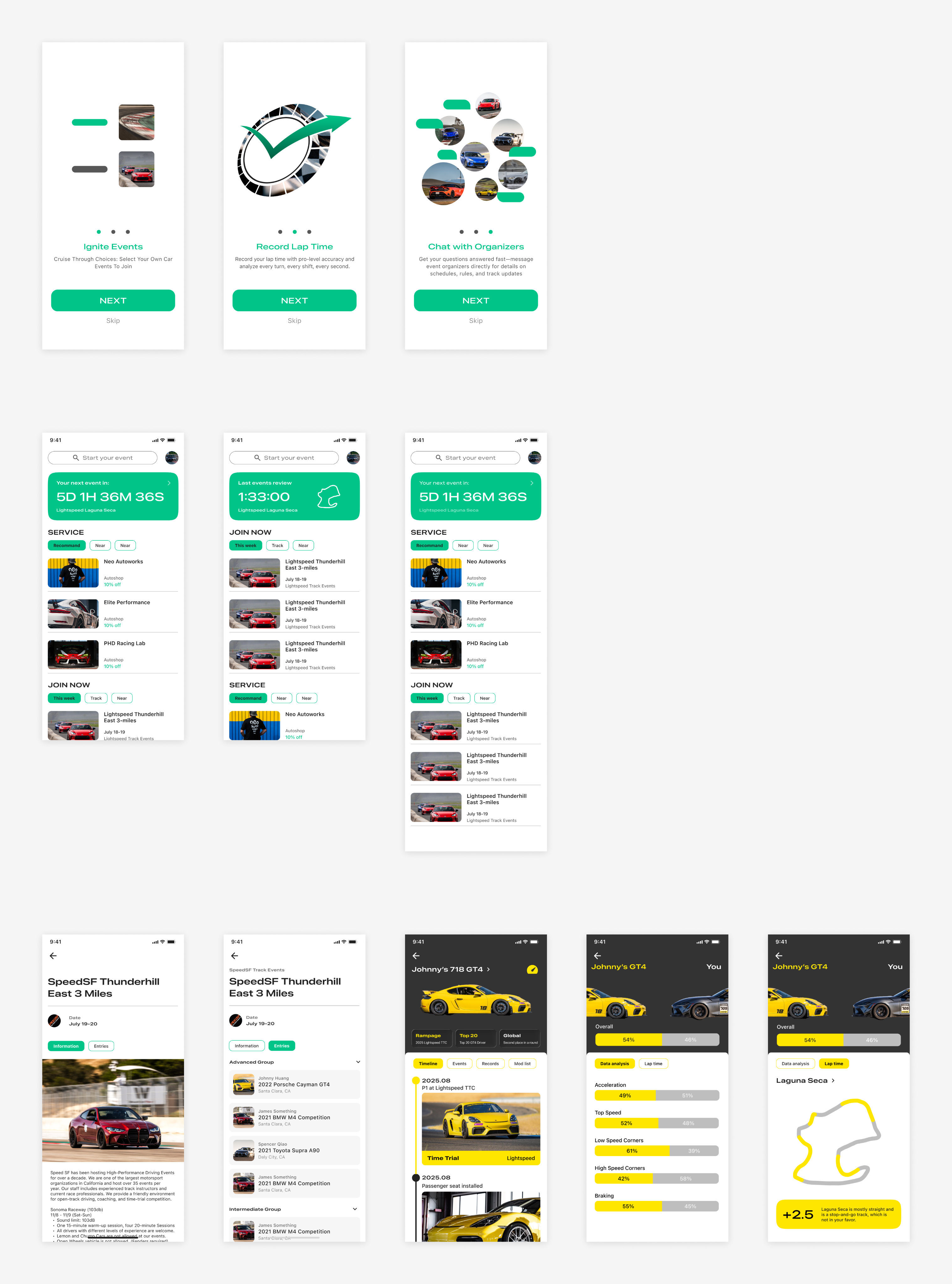
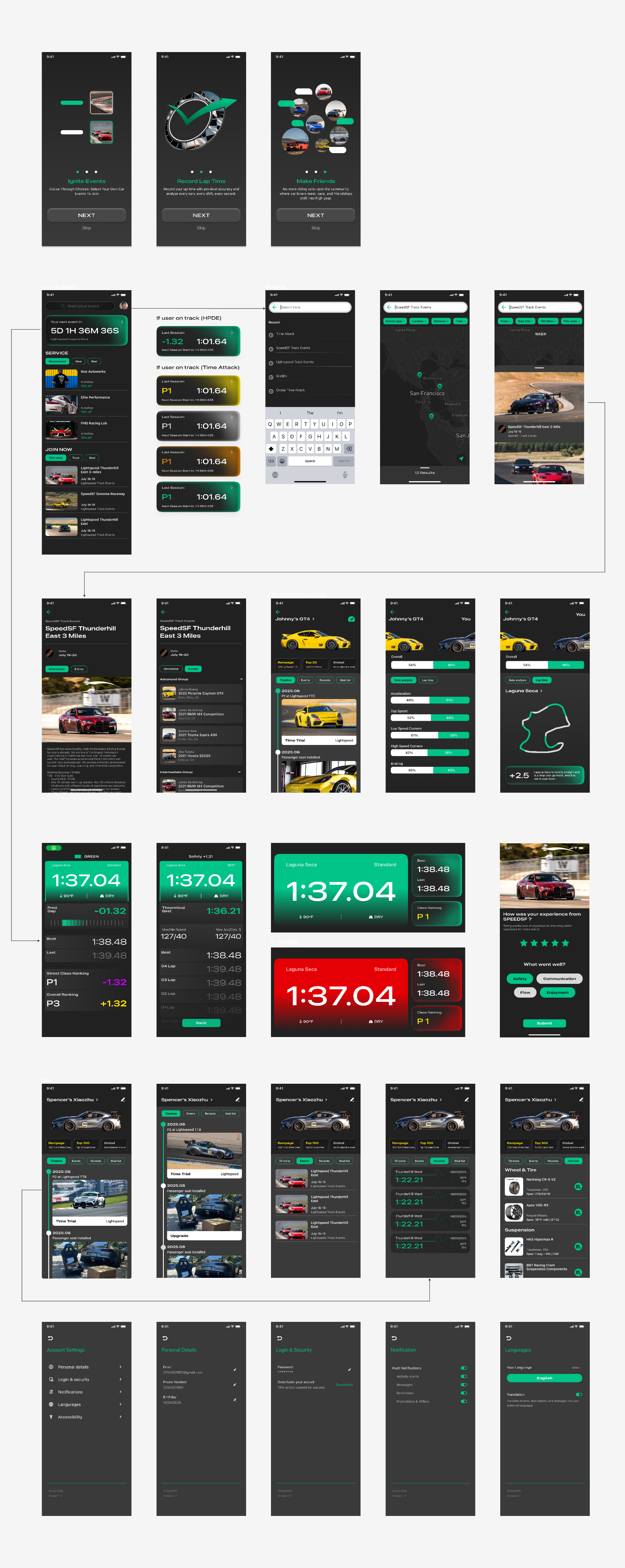
The final UX flow was built around real track day needs—from registration to live data tracking and post-session services. We prioritized clarity, responsiveness, and ease of use, especially during high-pressure moments on track.For users, the design blends performance data, profile mods, and social features to create a connected, rewarding experience. It’s more than just a timing tool—it’s a racing companion powered by data, reputation, and engagement.

Mobile (User)
My project hero
My project hero

Website (Organizers)

My project hero

Mobile (User)

My project hero
My project hero

Whats Next

Future Website Client Development

After discontinuing the C-side website, we plan to reintroduce a streamlined web client in later phases. This version will focus on core user needs such as registration, driver profiles, and event history, ensuring consistency with the mobile app while offering broader accessibility. The development will prioritize performance, usability, and seamless integration with the organizer’s B-side platform.

Goals for Business Strategy : Online Shop Coming Up Soon

We’re preparing to launch our in-app store, where users can browse track-related products and services. The store will be connected to each user’s profile and mod history, enabling personalized recommendations and engagement. At the same time, we’re actively in discussions with potential partners to bring high-quality gear, services, and brand collaborations into the platform.If you’re interested in collaborating, please reach out to us at dongyuc3@stanford.edu — we’d love to connect.

Building the Future of Track Days Together

We are excited to announce our collaboration with Turn8 Racing as one of our first sponsors and also partners, and we are actively looking to bring more track organizations on board. This partnership marks an important step in building a platform that truly serves both organizers and drivers. Currently, the project is in its beta stage, where we are testing core features, gathering feedback, and fine-tuning the experience to ensure smooth coordination, clear communication, and safer, more engaging events. Looking ahead, we plan to continuously expand our features—from smarter group management to richer driver engagement tools—so that track days become easier to organize, more fun to participate in, and centered around what matters most: the thrill of driving.

Overview

This project examines homelessness as a breakdown of trust within employment systems. While initially focused on job placement, research revealed deeper barriers such as lack of trust, mismatched expectations, and limited support, leading to unstable outcomes.

What I did

I led the project end-to-end from 0→1, framing the problem, conducting research, and translating insights into product direction. I identified trust as the key gap, validated it through A/B testing, and designed a two-way evaluation system to create a more transparent and reliable experience.

My project hero

Competitive Analysis

My project hero

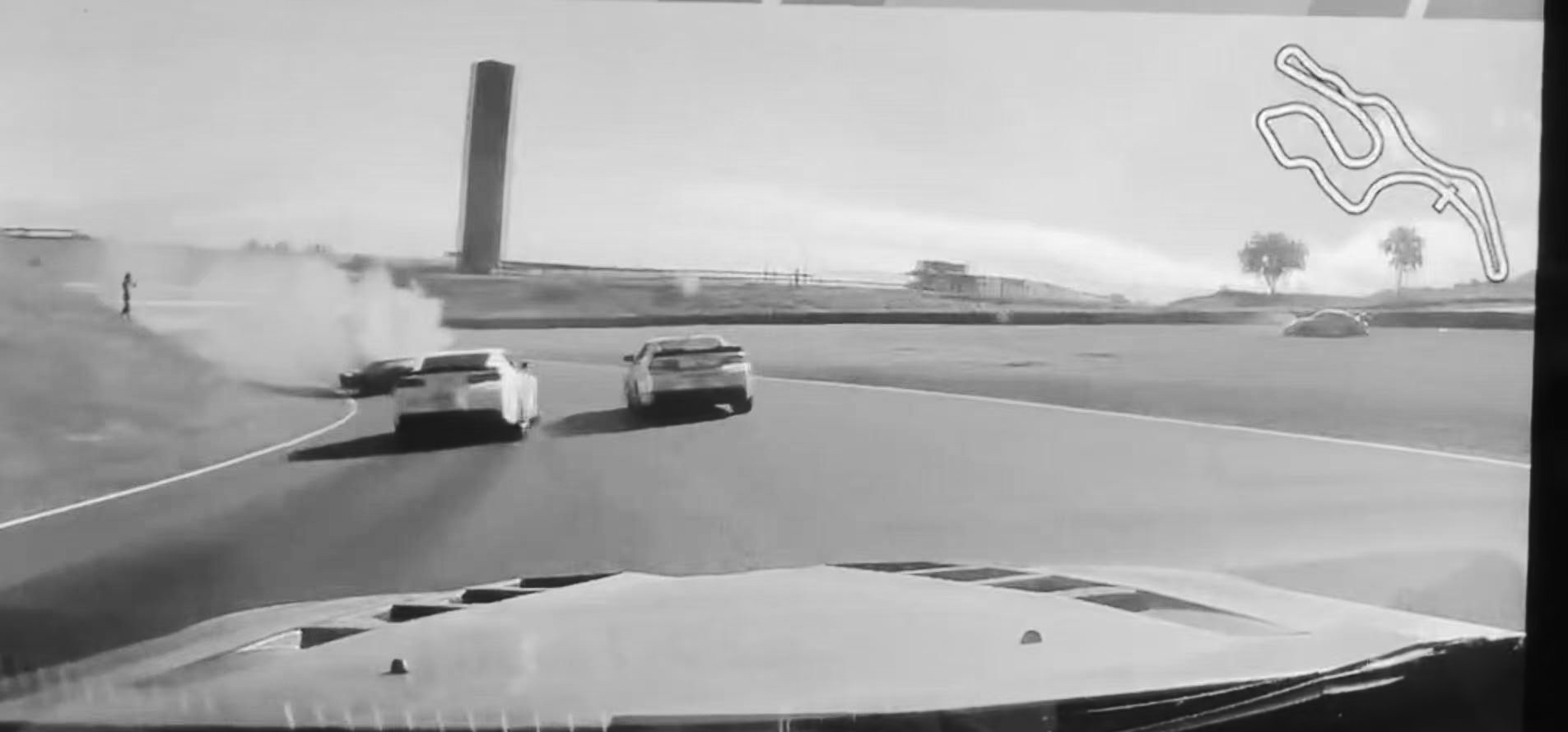
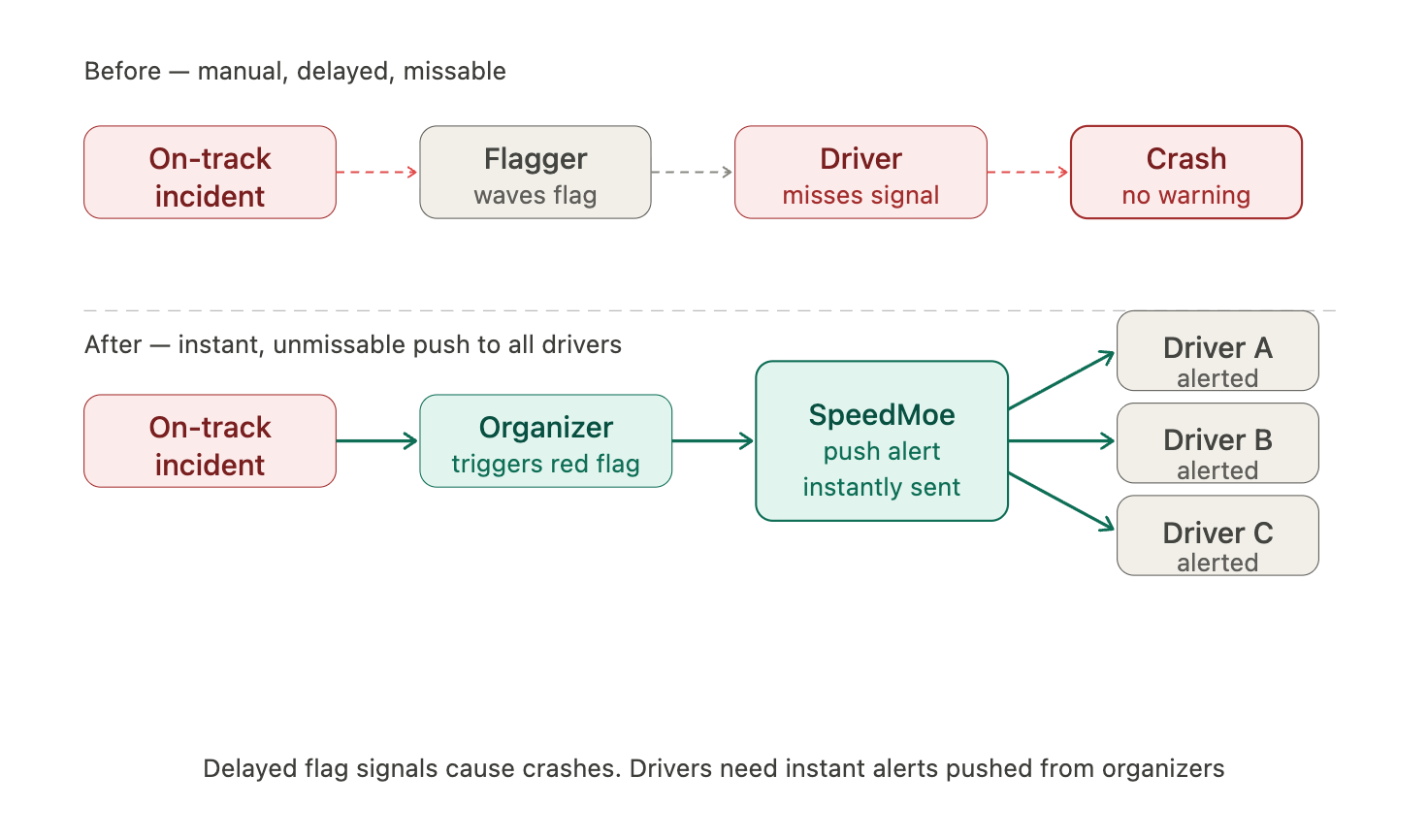
During a track day at Sonoma, a driver failed to see the flagger’s warning and collided with a car that was stopped sideways on the track. Incidents like this have happened multiple times, often caused by limited visibility, unclear communication, or drivers missing flag signals during high-speed sessions.

Logomark

SpeedMoe

Focus stays on safe and engaging driving experience.

UX Design

UX Research

UX Iteration

Landing detail

JUNE 2025-

SEPT 2025

Spencer Qiao (Design Lead)

James Cao (Project Manager)

Alex Tanaka (Engineer)

Essie Cao (Developer)

Shang Gao (Developer)

Ethen A (Developer)

Mike Wang (Designer)

Overview

SpeedMoe is a motorsport-focused platform designed to improve safety and organization during track day events. The project addresses issues caused by inconsistent driver classifications, mismatched vehicle performance, and increasing track congestion as motorsports participation grows. SpeedMoe creates a clearer and more efficient experience for both drivers and event organizers.

What I did

I was one of the project initiators, helping drive the project from 0→1 by shaping the early vision and development direction. I participated in product testing, gathered user feedback, and supported promotion efforts within the motorsport community. I also helped connect with potential partners and sponsors to expand collaborations and support the platform’s growth.

My project hero

An Incident at Sonoma Raceway

My project hero

During a track day at Sonoma, a car began leaking oil on track and eventually spun, ending up sideways in the middle of a corner. The following driver failed to see the flagger’s warning in time and crashed into the disabled car at high speed. Incidents like this have happened repeatedly at track events, where limited visibility, delayed communication, and inconsistent driver awareness create serious safety risks.

User Research

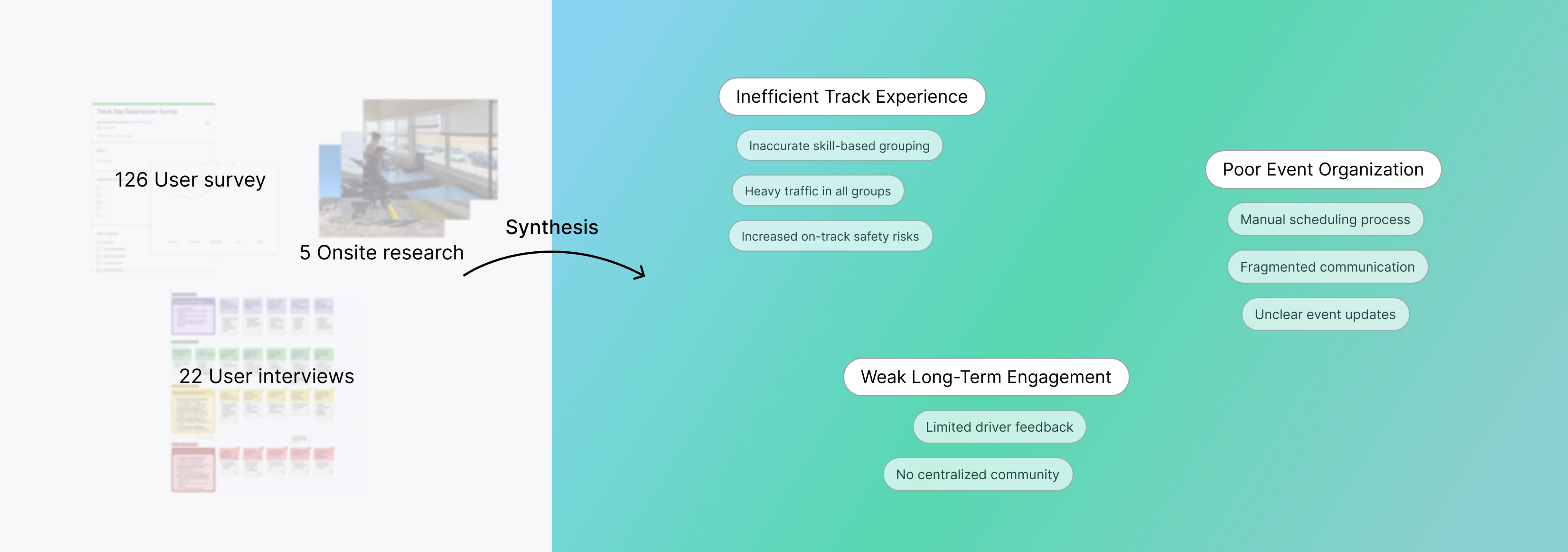
To better understand the current track day experience, we conducted surveys and interviews with drivers from different skill levels and backgrounds across multiple track events. Through both quantitative and qualitative research, we identified key issues related to grouping, safety, communication, and long-term community engagement.

My project hero

Competitive Analysis

My project hero

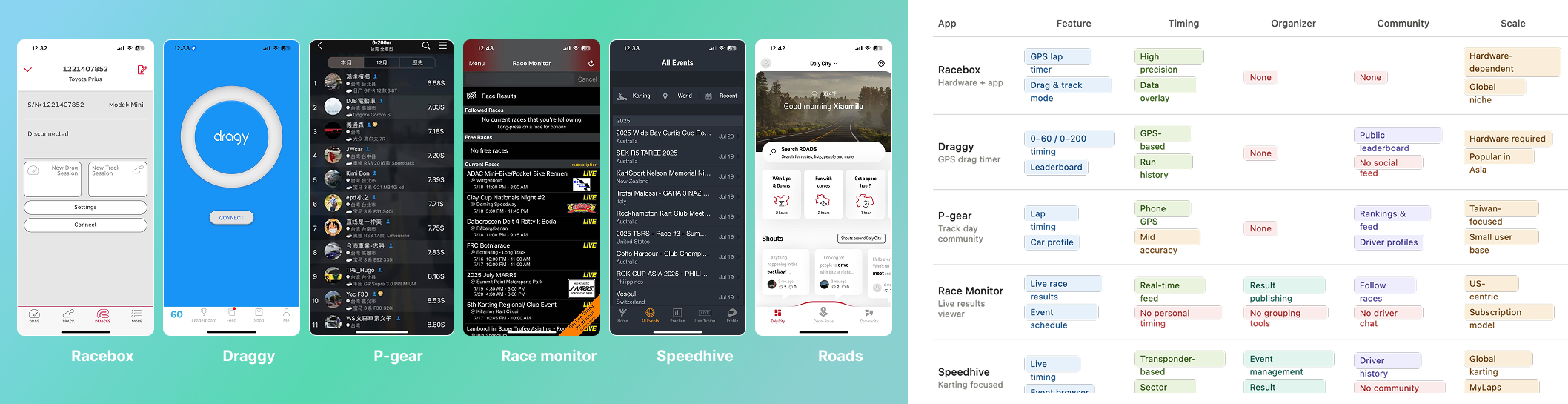
Our competitive products are either hardware or personal timing tools, or result-viewing/social platforms. None of them combine organizer operations, driver collaboration, data-driven grouping, and safety with engagement into a unified ecosystem; as a result, they cannot fundamentally improve grassroots track day efficiency, on-site safety, or long-term community growth.

No unified platform

Timing, organizer tools, and community are always split across separate apps.

Weak organizer tools

No app supports driver grouping, safety management, or event operations end-to-end.

Dark theme dominant

Most competitors default to dark UI, aligning with in-car/track environments and driver preference.

Key Research Insight

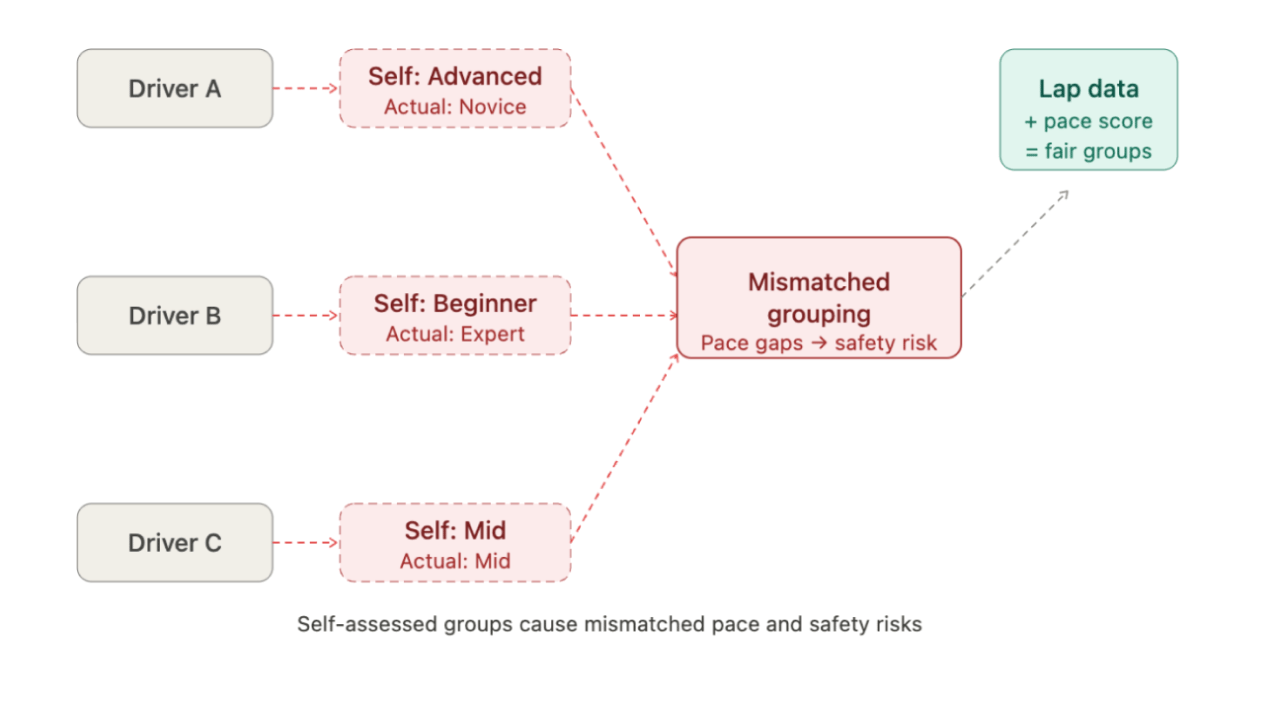
Data-driven grouping reduces both safety risk and frustration

Self-assessed groups cause mismatched pace and safety risks. Centralized performance data enables objective, safer grouping.

Real-time driver–organizer communication

is the missing safety layer

Delayed flag signals cause crashes. Drivers need instant, unmissable alerts pushed directly from organizers.

Analysising User needs

My project hero

What makes our product attractive

Leverage real-time feedback, playful challenges, and social visibility to keep users engaged, motivated, and feeling seen.‍‍Gamify progress tracking → turn steps from registration to racing into dynamic goalsLive feedback loop → drivers & organizers stay connected‍Enable social comparison → rankings, challenges, rivals→ Maybe expand into community features & collaborate with brands?

Sketch & Storyboard

This storyboard maps the full user journey & how user interactive with the event organizer and highlights how our app enhances the track day experience—while generating potential income through service integration and smart user targeting.

Product detail

Flow chart

My project hero

Wireframe

Low-fidelity prototypes were created using quick sketches and wireframes to explore core user flows and test interaction concepts. This stage focused on validating ideas and usability at low cost, enabling fast iteration before moving into detailed visual design.

My project hero

Design Iterations

Initial Iteration

Firstly, we started to design the UX Iteration 1 after my initial sketches. And optimized the interface based on our experience and feedback from previous events.

Safety issue during the testing

Testing

We invited 10 Participants to test our prototype 1 and we received two key pieces of feedback:1. As a motorsport-related app, it lacks excitement and distinctiveness—it needs a cooler, more engaging appeal.2. The website flow is overly complicated and should be streamlined for easier navigation.3. We need a B-side platform for organizers to control registration, grouping, scheduling, and safety, fully connected to the user-facing web and mobile app.

Product detail

We took their feedback seriously and made several key changes. In the app, we introduced motorsport-inspired elements such as carbon fiber textures and racing-themed visuals to enhance the overall vibe. We explored several design variations and ultimately selected the one that felt the boldest and most dynamic. At the same time, we refined the overall UI and simplified the user flow to make the experience smoother and more intuitive.

Product detail

Variations

My project hero

Considering the Organizer's System's Function

When we shared our concept with event organizers, they showed strong interest in the platform and expressed a desire to collaborate more deeply. They saw the potential of the system to improve on-site operations and strengthen communication with drivers, which motivated us to move forward in close partnership with them.

My project hero

Initial V1 UI

When we shared our concept with event organizers, they showed strong interest in the platform and expressed a desire to collaborate more deeply. They saw the potential of the system to improve on-site operations and strengthen communication with drivers, which motivated us to move forward in close partnership with them.

My project hero

Testing and Refinement

Usability Testing

We used RaceBox as our base device to begin on-site testing. This allowed us to verify that the data could be accurately captured and effectively integrated into our system. At the same time, we observed how users interacted with the app in real track conditions to evaluate the overall user experience and identify areas for improvement.

My project hero

Emergency Signal

The simulated red flag (emergency)  wasn’t prominent enough, making it hard for users to notice during sessions.

Usability

The timing button was too small and difficult to operate while wearing gloves.

Better Analyze

The organizers need a more integrated website to control the drivers, and they also need templates to analyze things.

Timing Refinement

Based on user feedback, we made several key improvements to the timing interface. We enlarged the timing button to accommodate gloved hands and removed the bottom navigation bar during active sessions to avoid accidental touches. Now, after pressing "Stop," users are taken directly to the analysis screen, ensuring a smooth and focused experience.

My project hero

Emergency (Red Flag) Design

In the event of a dangerous situation on the track, a red flag will appear on the screen. To ensure drivers notice it immediately, we implemented a flashing alert that blinks several times before transitioning into the previously designed breathing animation. This combination enhances visibility without being overly distracting during high-focus driving moments.

Integrate AI into the system

Instead of a static menu, the homepage will dynamically adapt using AI. Based on user data—such as track day performance, real-time conditions during events, and the time since or until their next track day—the system will deliver tailored homepage pushes that keep the experience relevant and engaging.

My project hero

Organizer's feature update

We need a B-side platform for organizers to control registration, grouping, scheduling, and safety, fully connected to the user-facing web and mobile app; for organizers, we have standardized the staff management list and operation pages, making everything more streamlined and accessible.

My project hero

Refocusing Resources: Discontinuing the C-side Website

After balancing development time and resources, and following careful evaluation through multiple usability and performance tests, we decided to discontinue the C-side website in order to focus on delivering a more efficient and optimized product experience.

Branding Design

Visual Guidelines

Color Plate

We chose a dark gray and green color palette to evoke a sense of technology, precision, and motorsport intensity.

Theme color Inspiration

After balancing development time and resources, and following careful evaluation through multiple usability and performance tests, we decided to discontinue the C-side website in order to focus on delivering a more efficient and optimized product experience.

My project hero

Logo Design

We combined the racing flag with the letter "M" to create a simple, bold logo. It’s designed for versatility—easy to use in apps, print, and even making it noticebale on all kinds of sponsored car liveries in differnt color.

My project hero

HIGH-FIDELITY PROTOTYPE

Final UX Flow Overview

(Web + App + Track Integration)

The final UX flow was built around real track day needs—from registration to live data tracking and post-session services. We prioritized clarity, responsiveness, and ease of use, especially during high-pressure moments on track.For users, the design blends performance data, profile mods, and social features to create a connected, rewarding experience. It’s more than just a timing tool—it’s a racing companion powered by data, reputation, and engagement.

Mobile (User)

My project hero
My project hero

Mobile (User)

My project hero
My project hero

Website (Organizers)

My project hero

Whats Next

Future Website Client Development

After discontinuing the C-side website, we plan to reintroduce a streamlined web client in later phases. This version will focus on core user needs such as registration, driver profiles, and event history, ensuring consistency with the mobile app while offering broader accessibility. The development will prioritize performance, usability, and seamless integration with the organizer’s B-side platform.

Goals for Business Strategy : Online Shop Coming Up Soon

We’re preparing to launch our in-app store, where users can browse track-related products and services. The store will be connected to each user’s profile and mod history, enabling personalized recommendations and engagement. At the same time, we’re actively in discussions with potential partners to bring high-quality gear, services, and brand collaborations into the platform.If you’re interested in collaborating, please reach out to us at dongyuc3@stanford.edu — we’d love to connect.

Building the Future of Track Days Together

We are excited to announce our collaboration with Turn8 Racing as one of our first sponsors and also partners, and we are actively looking to bring more track organizations on board. This partnership marks an important step in building a platform that truly serves both organizers and drivers. Currently, the project is in its beta stage, where we are testing core features, gathering feedback, and fine-tuning the experience to ensure smooth coordination, clear communication, and safer, more engaging events. Looking ahead, we plan to continuously expand our features—from smarter group management to richer driver engagement tools—so that track days become easier to organize, more fun to participate in, and centered around what matters most: the thrill of driving.

Logomark