Halo
Helping homeless people find jobs and rebuild their lives.
MOBILE VERSION UNDER CONSTRUCTION
PLEASE MOVE TO PC VERSION
THANK YOU!
NOV 2024-
FEB 2025
Spencer Qiao (UX Designer)
Mike Wang (Researcher)
Andre Davidson (PM)
Kevin Pham (UX Designer)
Chris Taylor (Engineer)
Dillon Harding (Engineer)
OVERVIEW
This project examines homelessness as a breakdown of trust within employment systems. While initially focused on job placement, research revealed deeper barriers such as lack of trust, mismatched expectations, and limited support, leading to unstable outcomes.
WHAT I DID
I led the project end-to-end from 0→1, framing the problem, conducting research, and translating insights into product direction. I identified trust as the key gap, validated it through A/B testing, and designed a two-way evaluation system to create a more transparent and reliable experience.
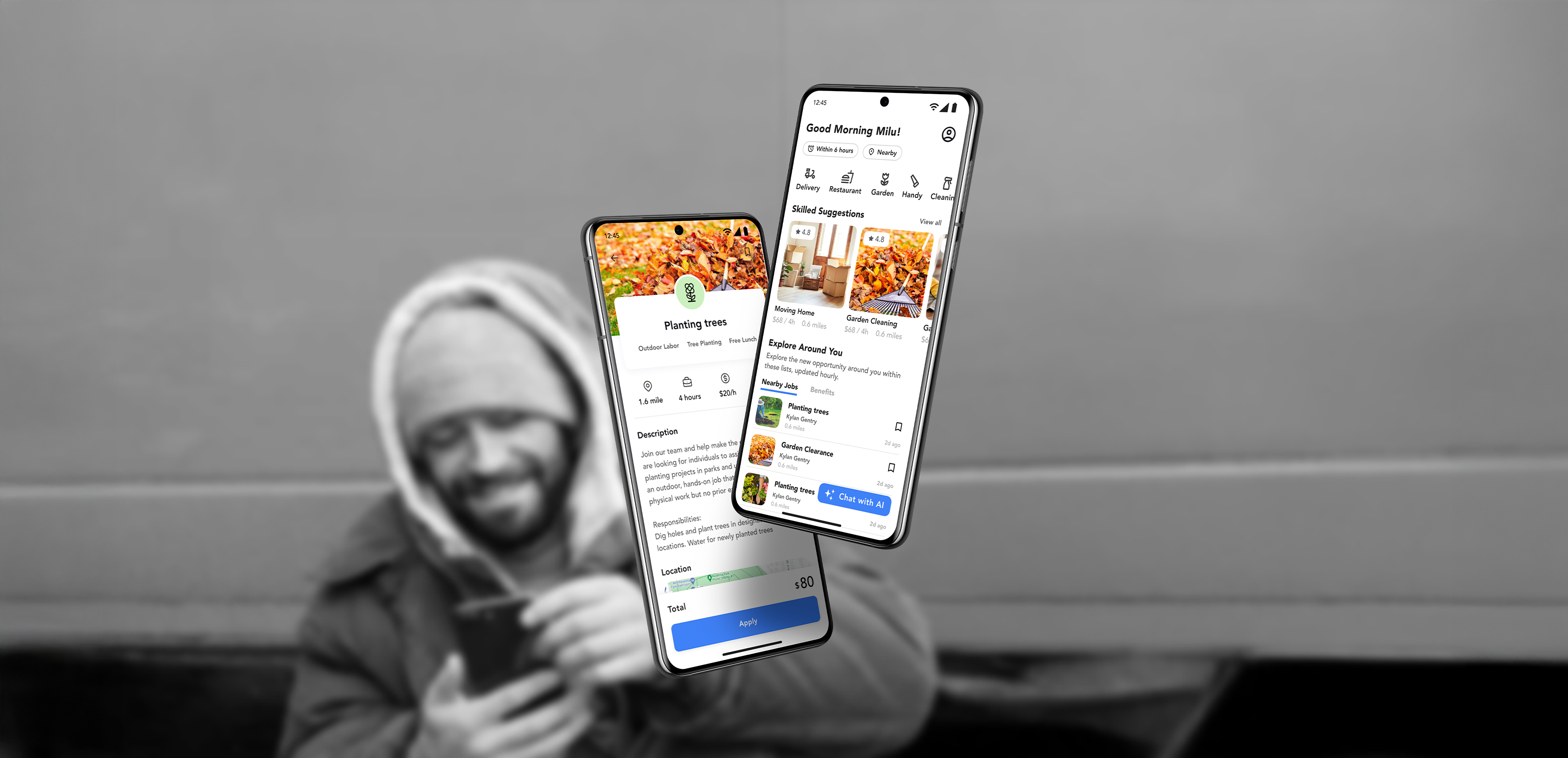
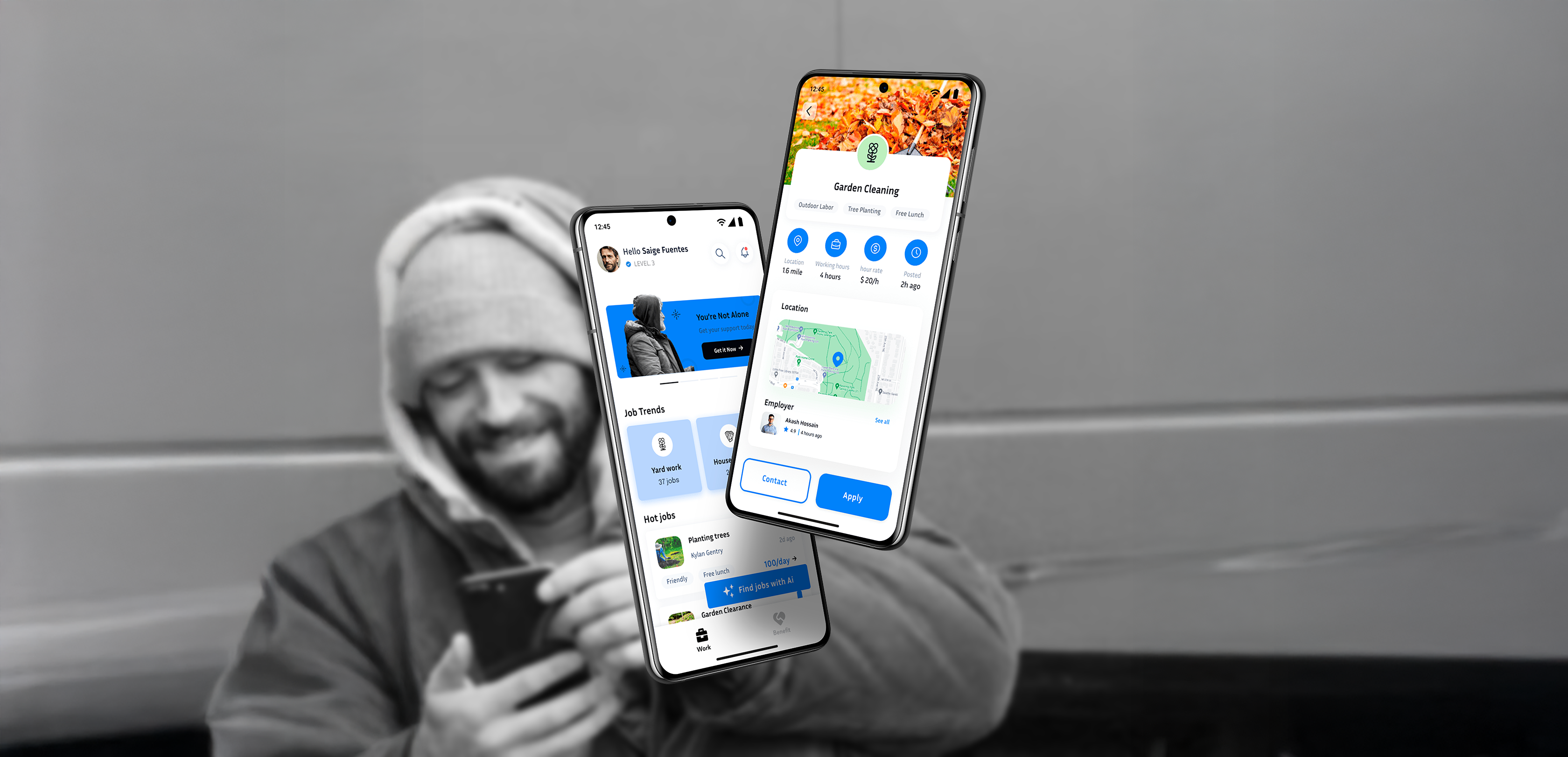
FINAL DESIGN PREVIEW
I led a collaborative design sprint with designers, researchers, homeless individuals, and field experts. Together, we identified key insights and implemented meaningful design changes to better support homeless reintegration.

Data Research
To deeply understand the challenges of social reintegration for the homeless community, we conducted a multi-dimensional research phase. This process focused on bridging the gap between existing systemic support and the lived experiences of individuals on the ground.
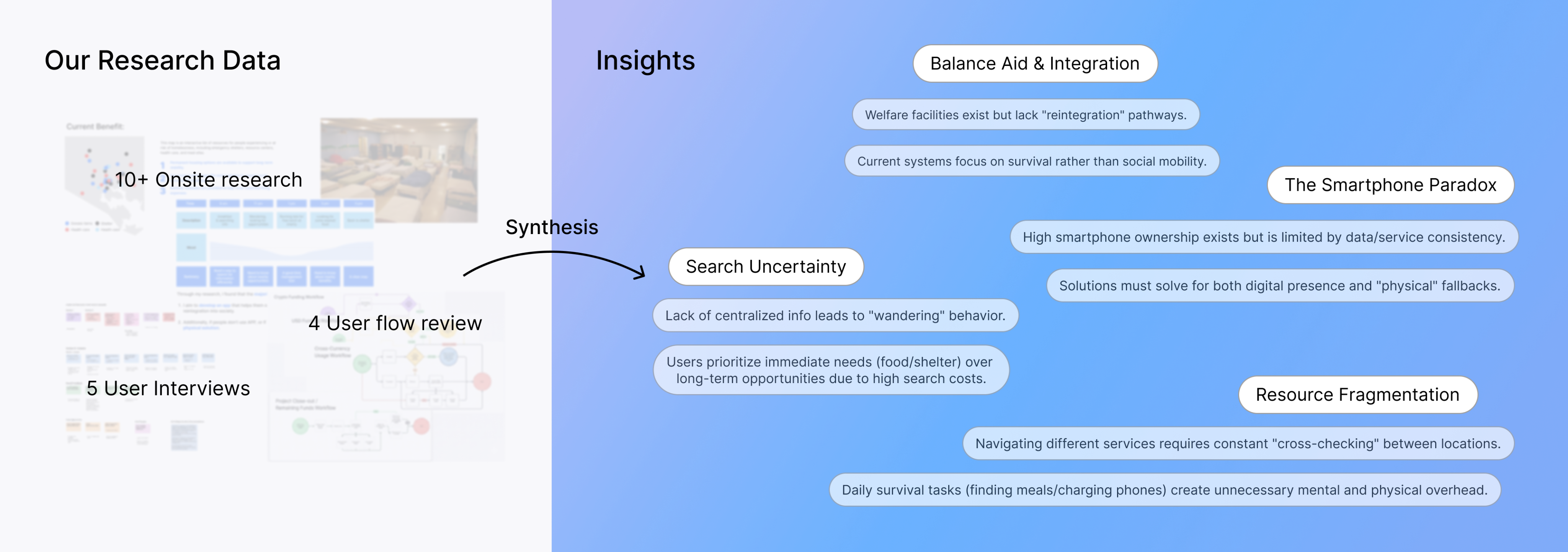
(I used Claude and FigJam for interview clustering and affinity mapping)
Local Workforce Research
70% of labor does not require skills, but is still very expensive, and also under staff shortage
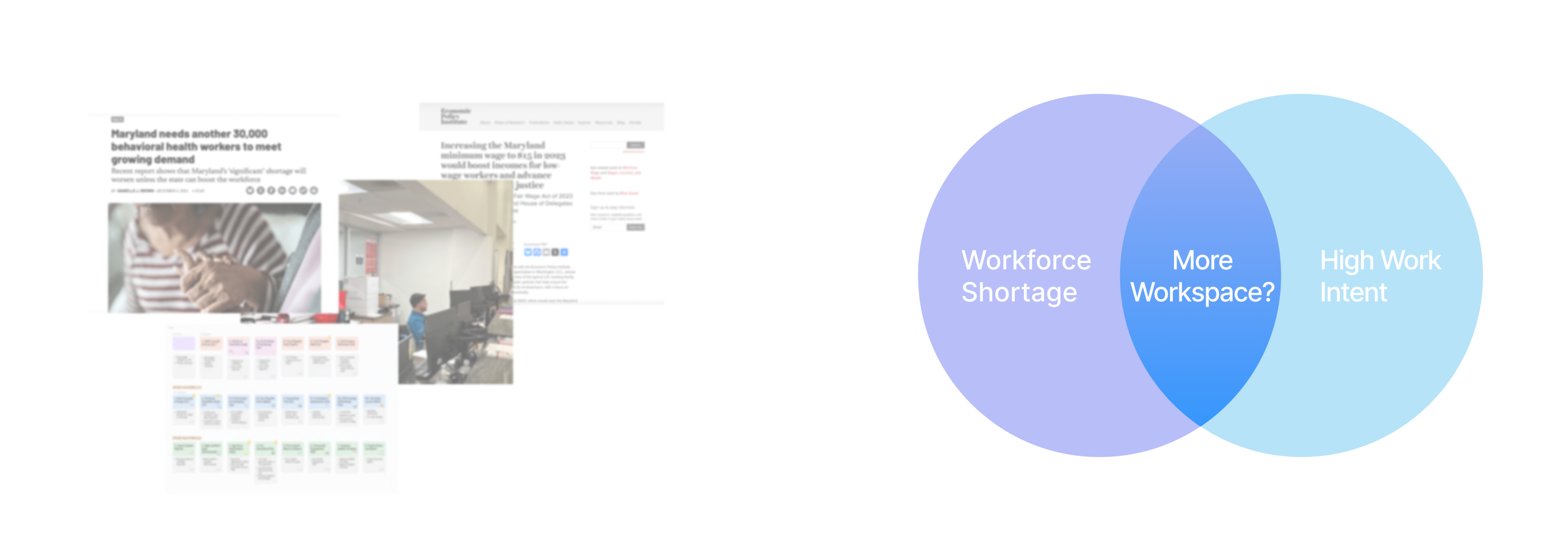
Why mobile Platform?
Based on our research, over 65% of people in shelters own smartphones, most of which are Android devices. Shelters also provide public charging stations, making mobile access relatively reliable.
Although some shelters offer desktop computers, phones are more convenient and accessible anytime. In addition, our system requires real-name verification and location services, making a mobile app more suitable than a website.
Therefore, we chose Android as the platform for our MVP.
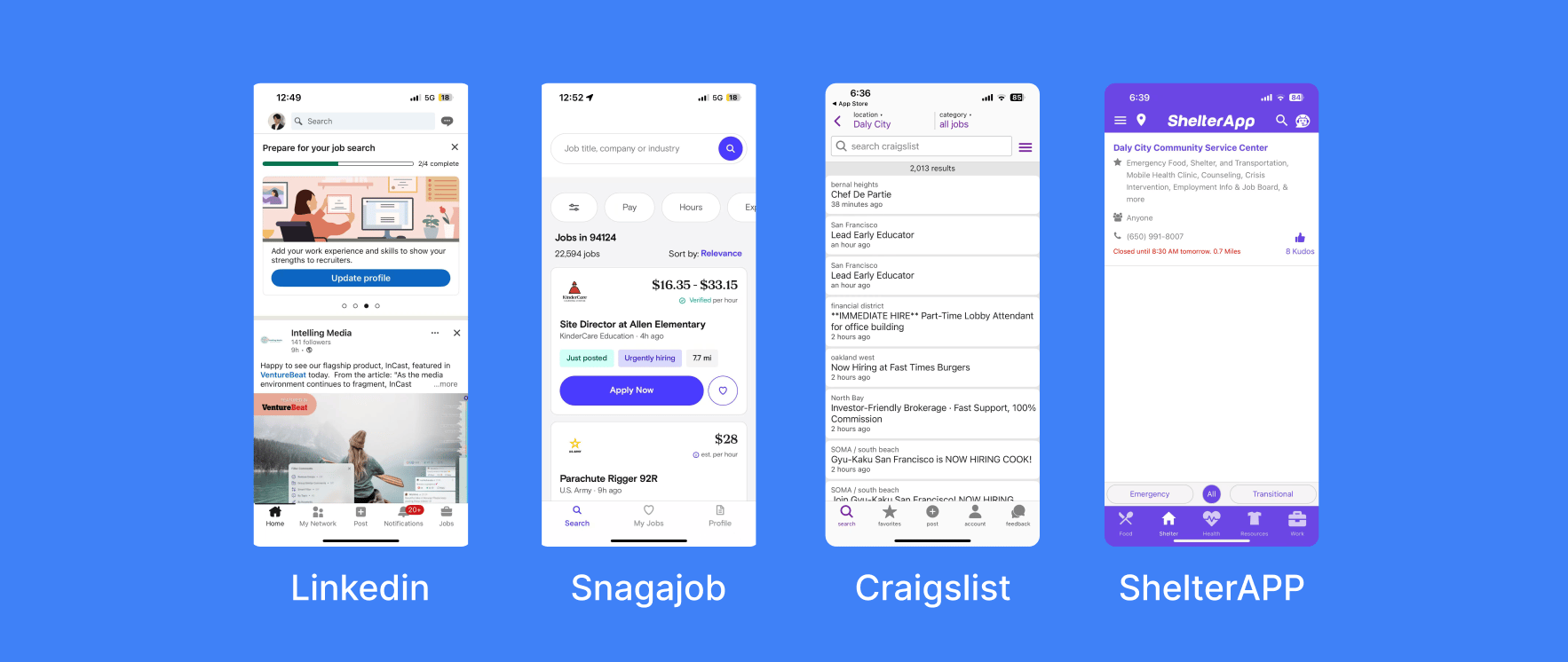
Whats current app doing & Why they are not helping homeless
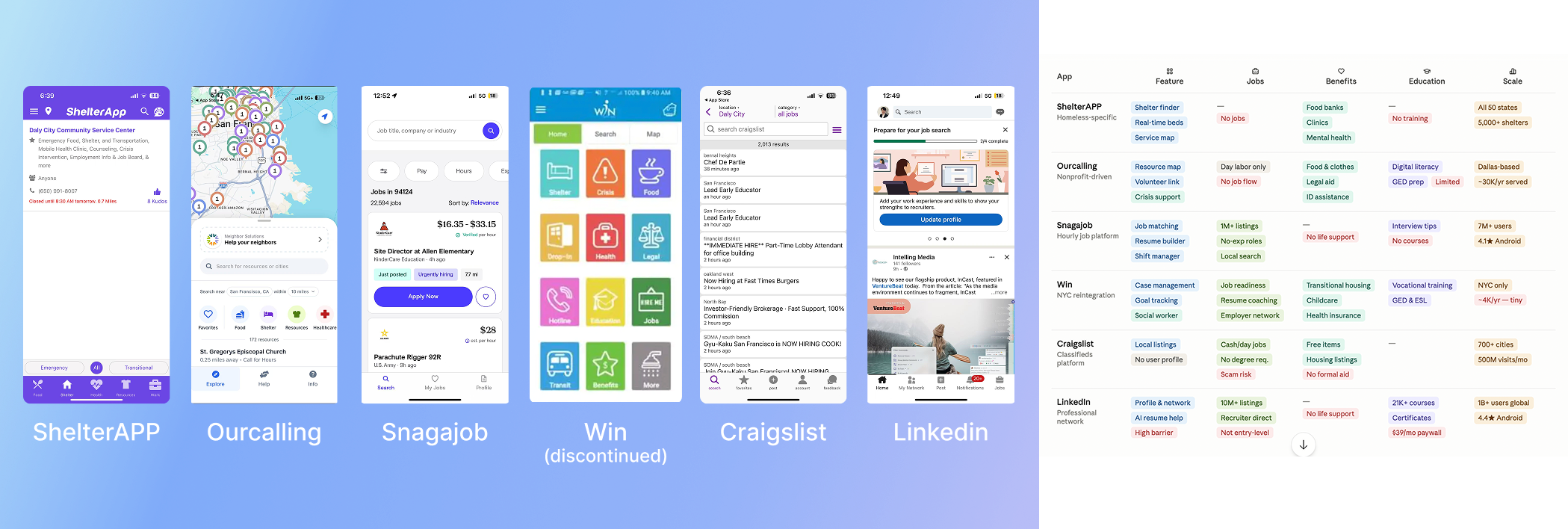
No one-stop resource access
Shelter, food, and healthcare are scattered across different apps — too hard to navigate.
Jobs are inaccessible
Most platforms require an address, phone, and work history — barriers homeless users can't meet.
No path from crisis to employment
Apps handle survival or jobs, never both. There's no guided journey from day one to stable work.
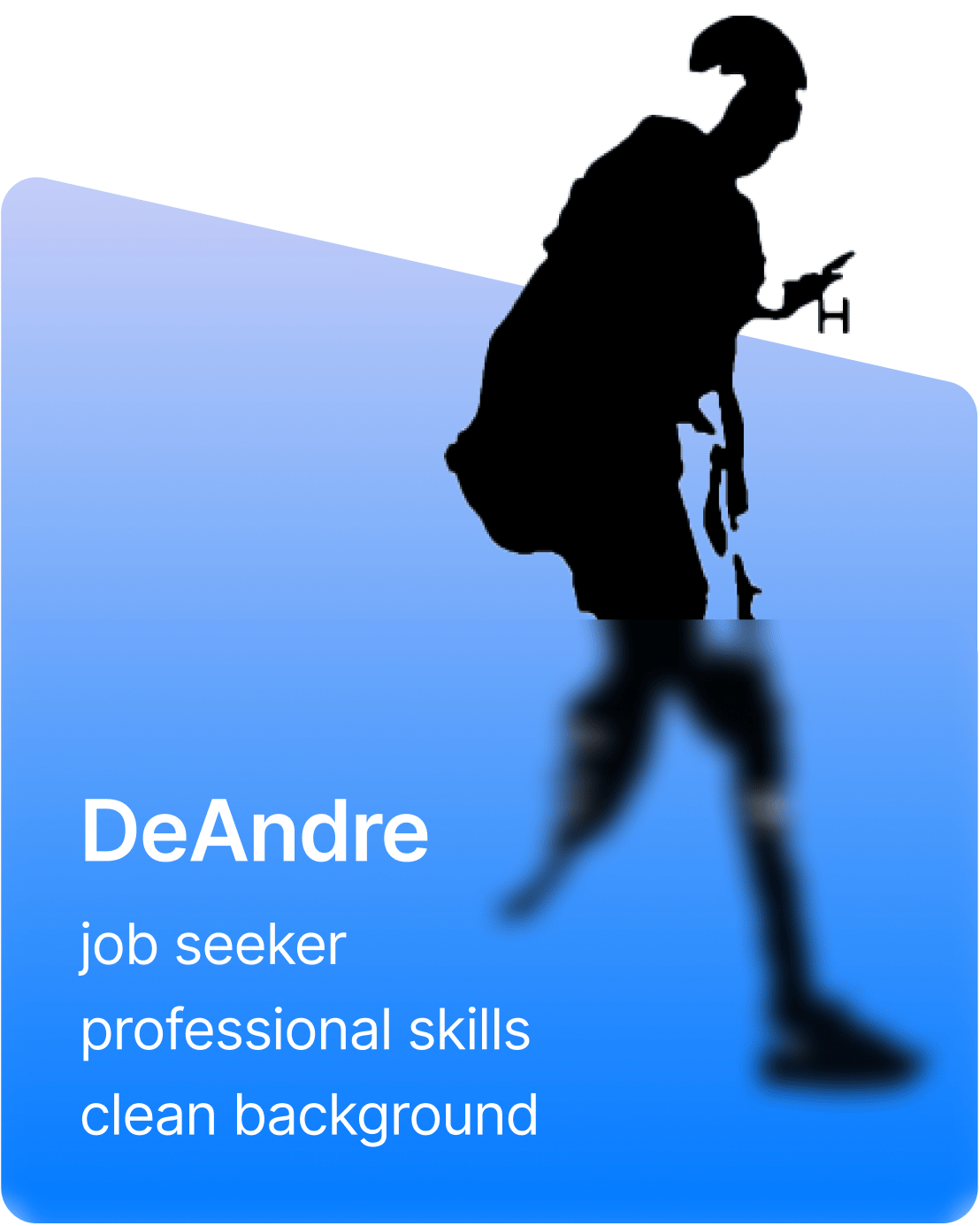
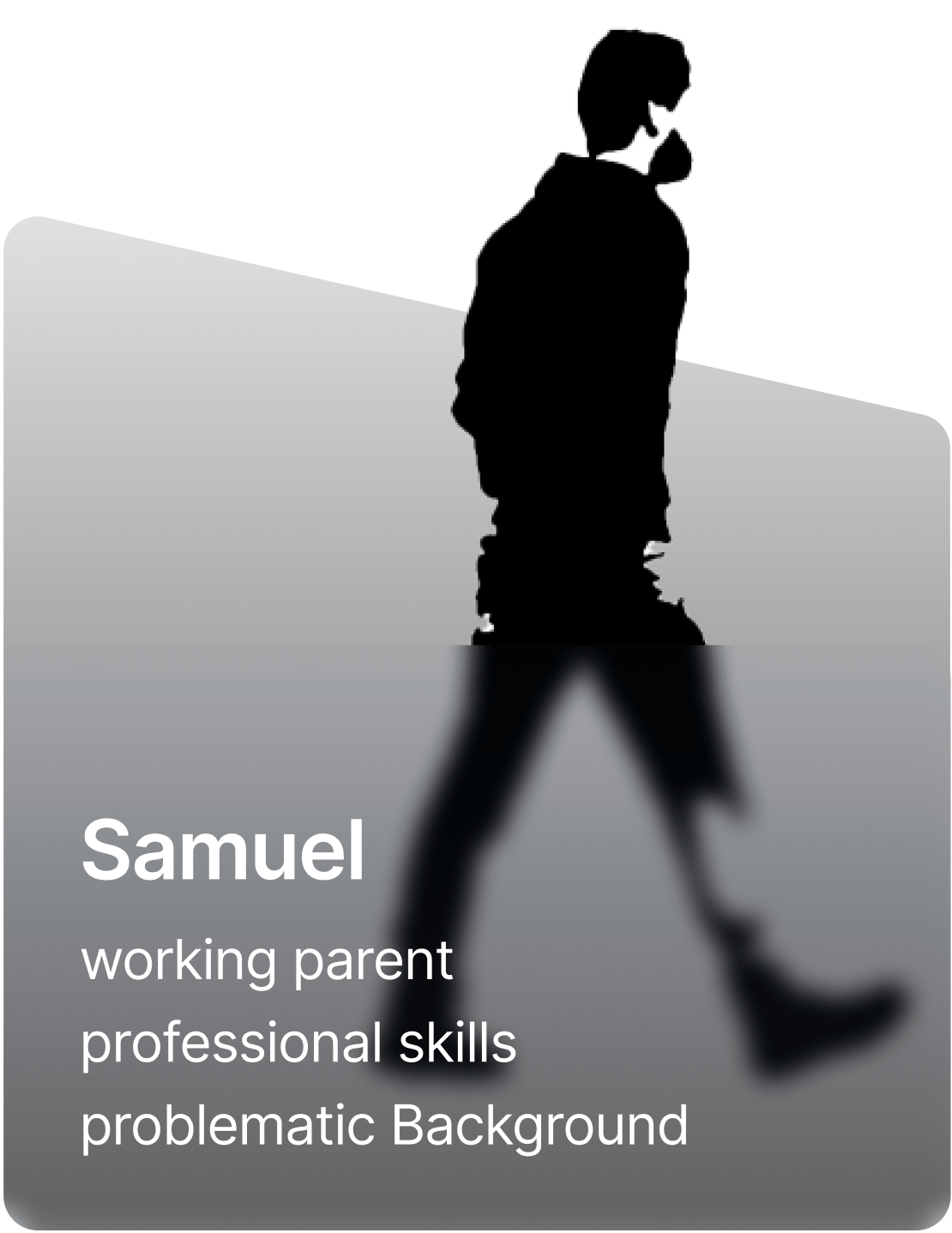
Narrow Down User Group
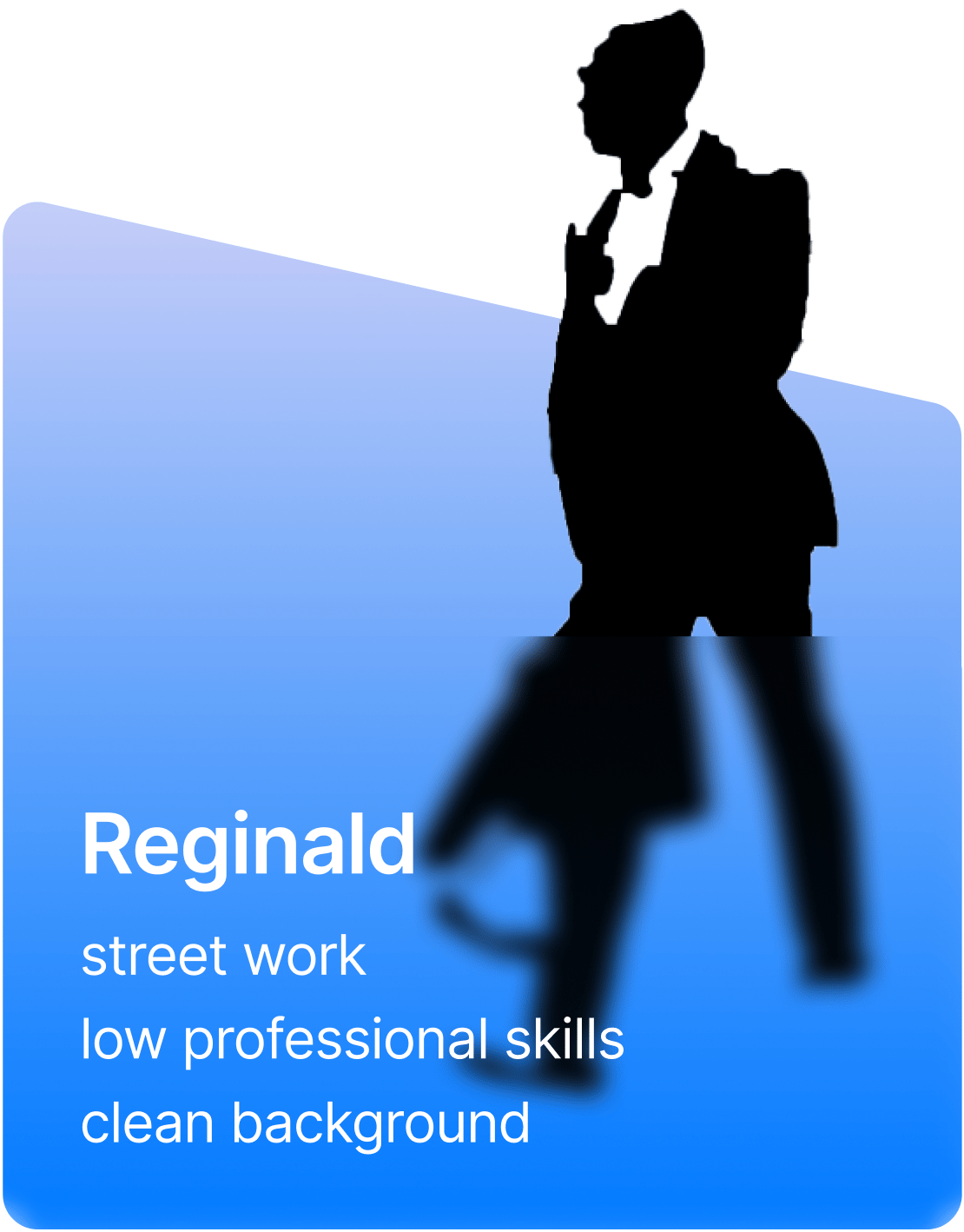
Over 30% of homeless individuals actively seek work but face systemic barriers. Many lost housing due to unemployment, medical debt, or family issues. While shelters offer short-term help, long-term solutions should prioritize jobs and stability.
After discussions, we decided to first assist those who have the ability and confidence to reintegrate into society. However, our service-based resources will remain accessible to everyone,
Paper prototypes+ Co-design with participants
I did three variations of the low-fidelity prototypes within two weeks to do the usability test and A/B tests in order to scope the poential of the variations and prepare for the refinement design later
High-fidelity Prototypes

Halo
Helping homeless people find jobs and rebuild their lives.
UX Design
UX Research
UX Iteration
NOV 2024-
FEB 2025
Spencer Qiao (UX Designer)
Mike Wang (Researcher)
Andre Davidson (PM)
Kevin Pham (UX Designer)
Chris Taylor (Engineer)
Dillon Harding (Engineer)
Overview
This project examines homelessness as a breakdown of trust within employment systems. While initially focused on job placement, research revealed deeper barriers such as lack of trust, mismatched expectations, and limited support, leading to unstable outcomes.
What I did
I led the project end-to-end from 0→1, framing the problem, conducting research, and translating insights into product direction. I identified trust as the key gap, validated it through A/B testing, and designed a two-way evaluation system to create a more transparent and reliable experience.
FINAL DESIGN PREVIEW
I led a collaborative design sprint with designers, researchers, homeless individuals, and field experts. Together, we identified key insights and implemented meaningful design changes to better support homeless reintegration.
Data Research
To deeply understand the challenges of social reintegration for the homeless community, we conducted a multi-dimensional research phase. This process focused on bridging the gap between existing systemic support and the lived experiences of individuals on the ground.
(I used Claude and FigJam for interview clustering and affinity mapping)
Local Workforce Research
70% of labor does not require skills, but is still very expensive, and also under staff shortage
Why mobile Platform?
Based on our research, over 65% of people in shelters own smartphones, most of which are Android devices. Shelters also provide public charging stations, making mobile access relatively reliable.
Although some shelters offer desktop computers, phones are more convenient and accessible anytime. In addition, our system requires real-name verification and location services, making a mobile app more suitable than a website.
Therefore, we chose Android as the platform for our MVP.
Whats current app doing & Why they are not helping homeless
No one-stop resource access
Shelter, food, and healthcare are scattered across different apps — too hard to navigate.
Jobs are inaccessible
Most platforms require an address, phone, and work history — barriers homeless users can't meet.
No path from crisis to employment
Apps handle survival or jobs, never both. There's no guided journey from day one to stable work.
Narrow Down User Group
Over 30% of homeless individuals actively seek work but face systemic barriers. Many lost housing due to unemployment, medical debt, or family issues. While shelters offer short-term help, long-term solutions should prioritize jobs and stability.
After discussions, we decided to first assist those who have the ability and confidence to reintegrate into society. However, our service-based resources will remain accessible to everyone,
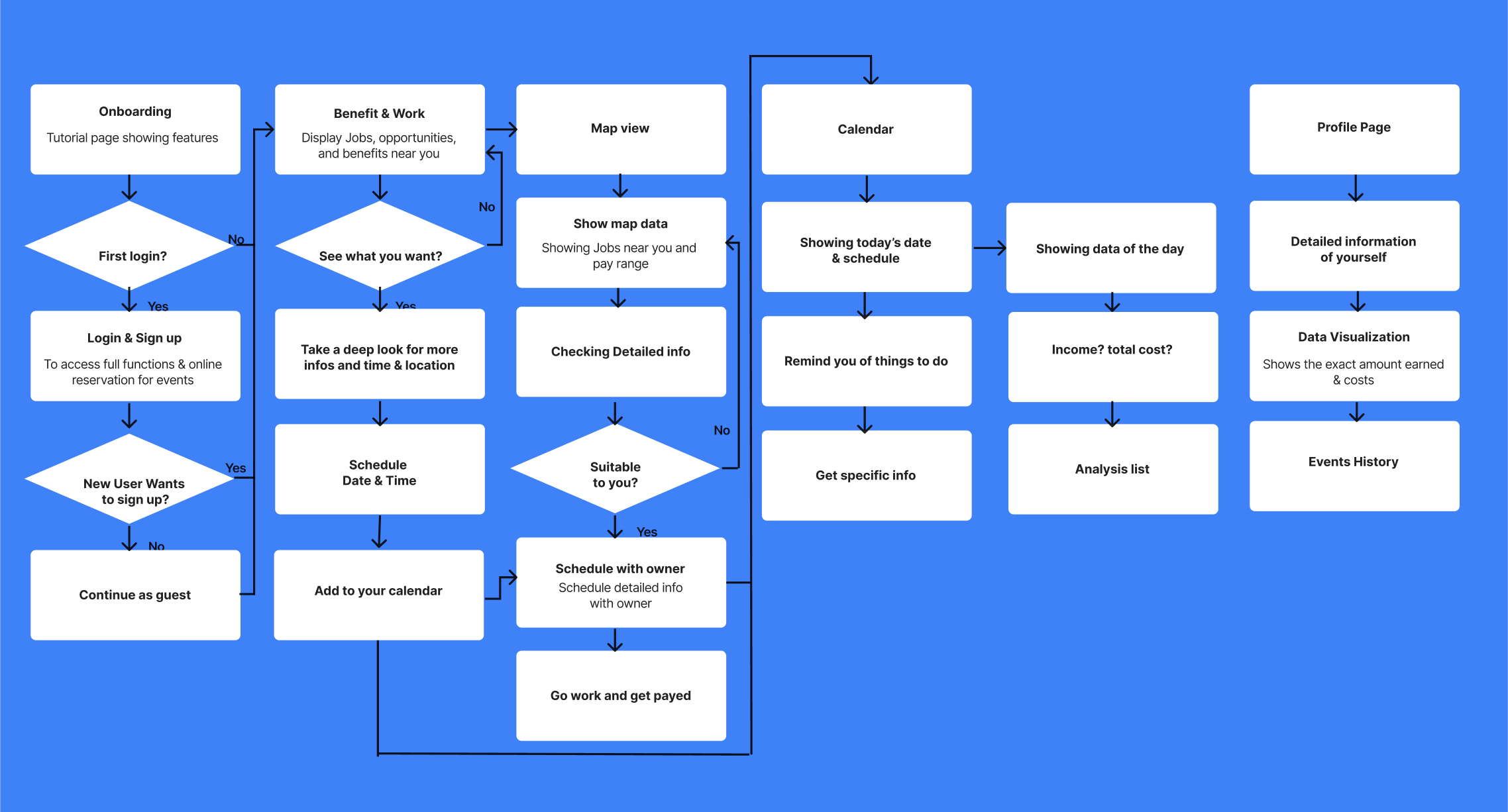
Initial Mind Map
I led a collaborative design sprint with designers, researchers, homeless individuals, and field experts. Together, we identified key insights and implemented meaningful design changes to better support homeless reintegration.
Wireframe
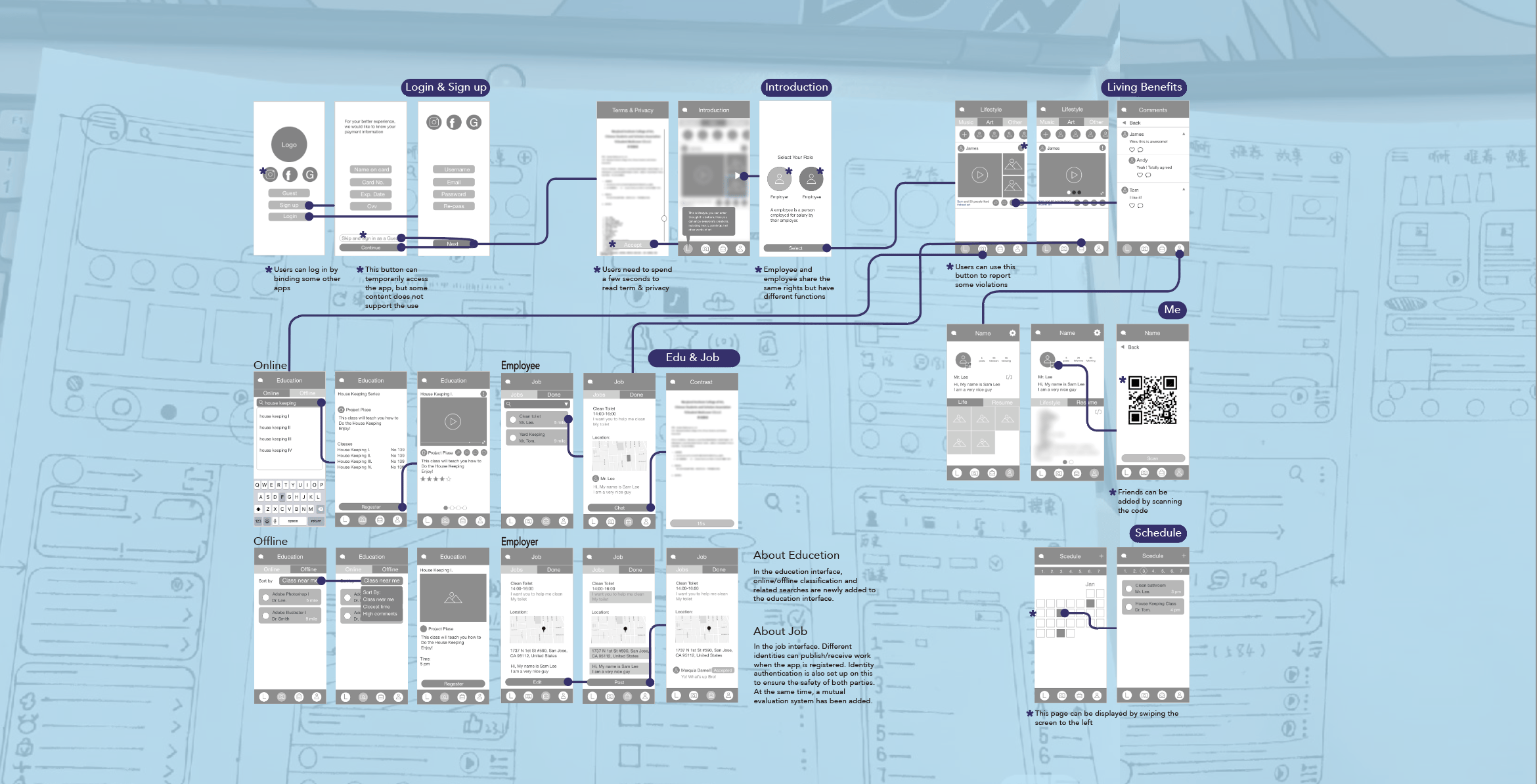
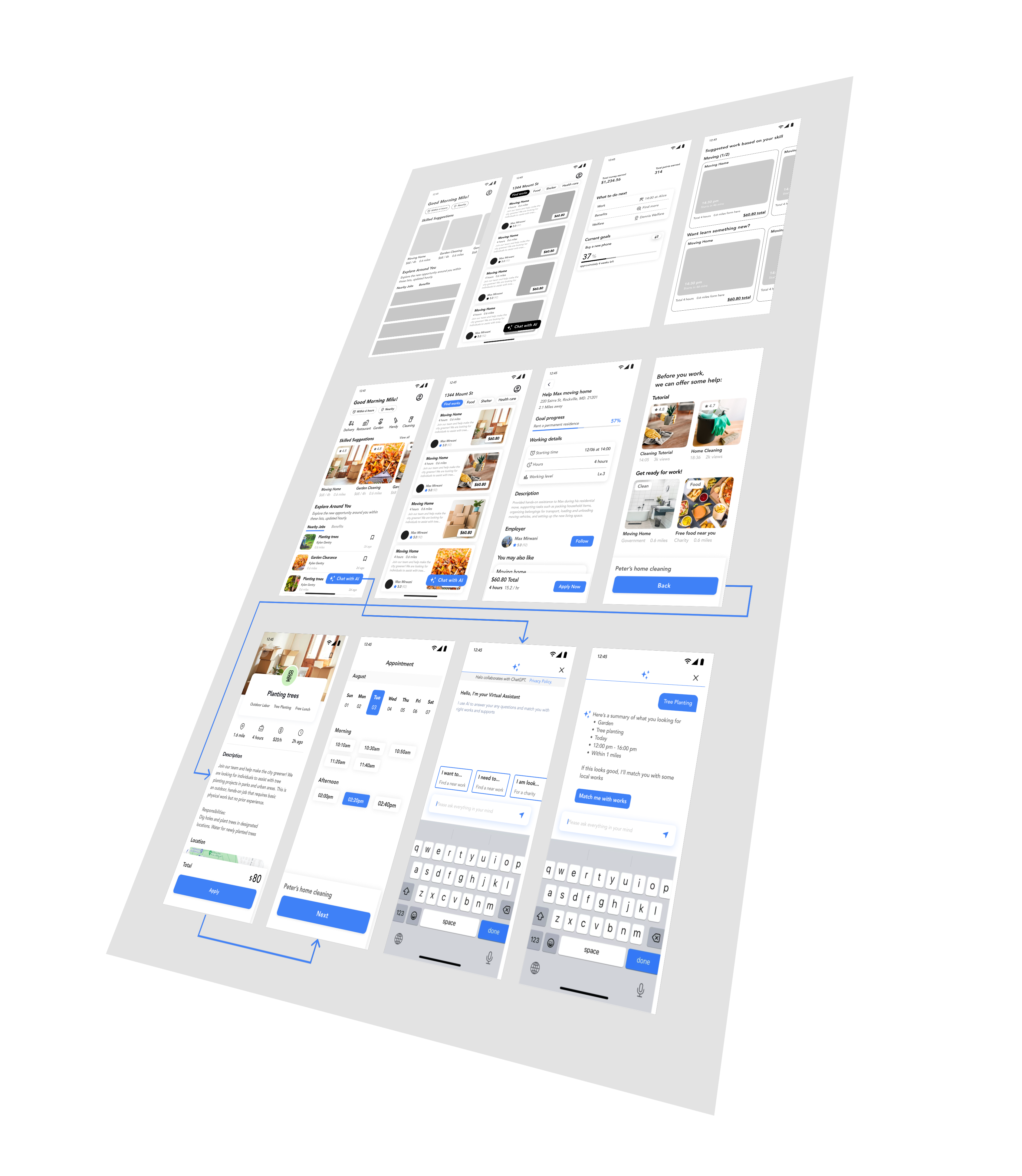
Based on our mind maps, we started with the initial wireframe
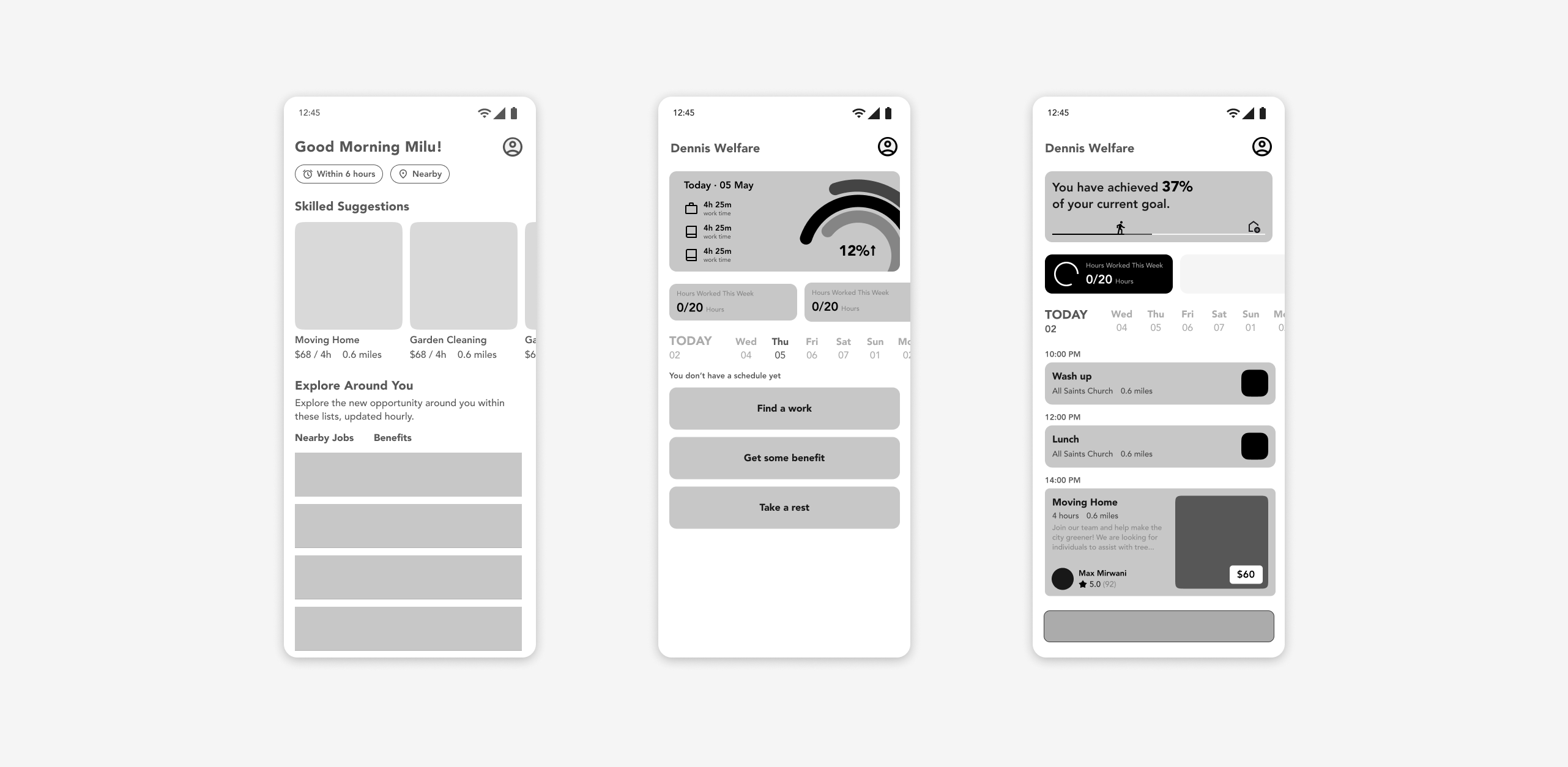
Narrow down to three initial variations
Based on the research insights and the feedback from participant, we narrow all the ideas down to three initial design concepts, preparing for the low-fidelity prototype and test iterations.
Paper prototypes+ Co-design with participants
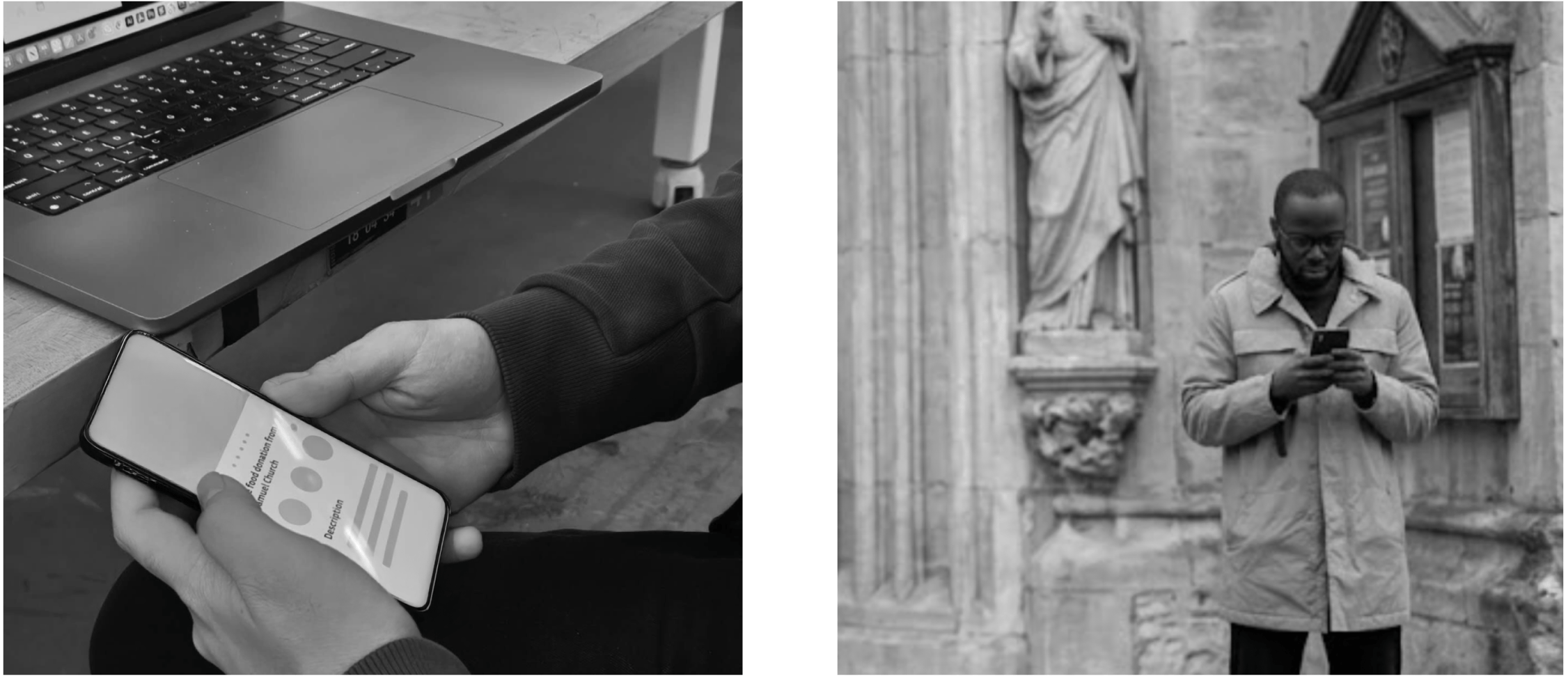
I did three variations of the low-fidelity prototypes within two weeks to do the usability test and A/B tests in order to scope the poential of the variations and prepare for the refinement design later
Usability tests + A/B tests
Safety & privacy concerns
Users skipped registration due to fear of data misuse. Trust signals are needed before any personal input is requested.
Literacy & accessibility barriers
Low literacy and vision issues made dense text and small UI elements hard to navigate. Larger fonts and icon-supported labels are needed.
Low self-efficacy
Users frequently dropped off saying "this isn't for me." Encouragement cues and affirming microcopy are needed to keep users moving forward.
Challenge 1: How do we beat unexpected market competition?
The Challenge: Market competition exceeded our expectations.
The job market for the unhoused population is extremely restricted due to a critical lack of outreach and deeply ingrained systemic distrust. Because individuals have very few employment options to choose from, a standard LinkedIn-style job matching platform is completely ineffective. Instead of a passive marketplace, they require proactive, trust-building resource navigation and direct organizational support.
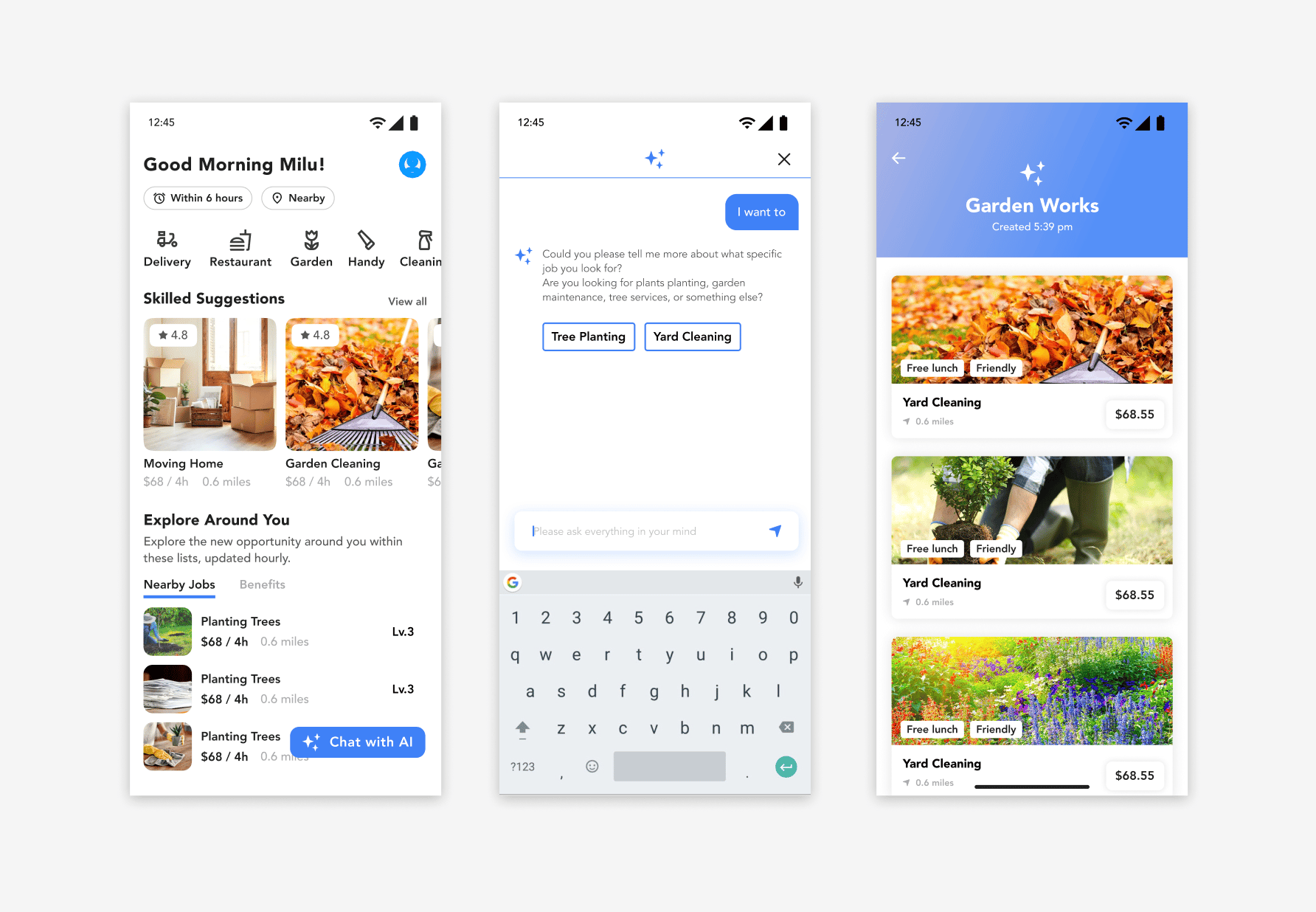
Establish AI job matching
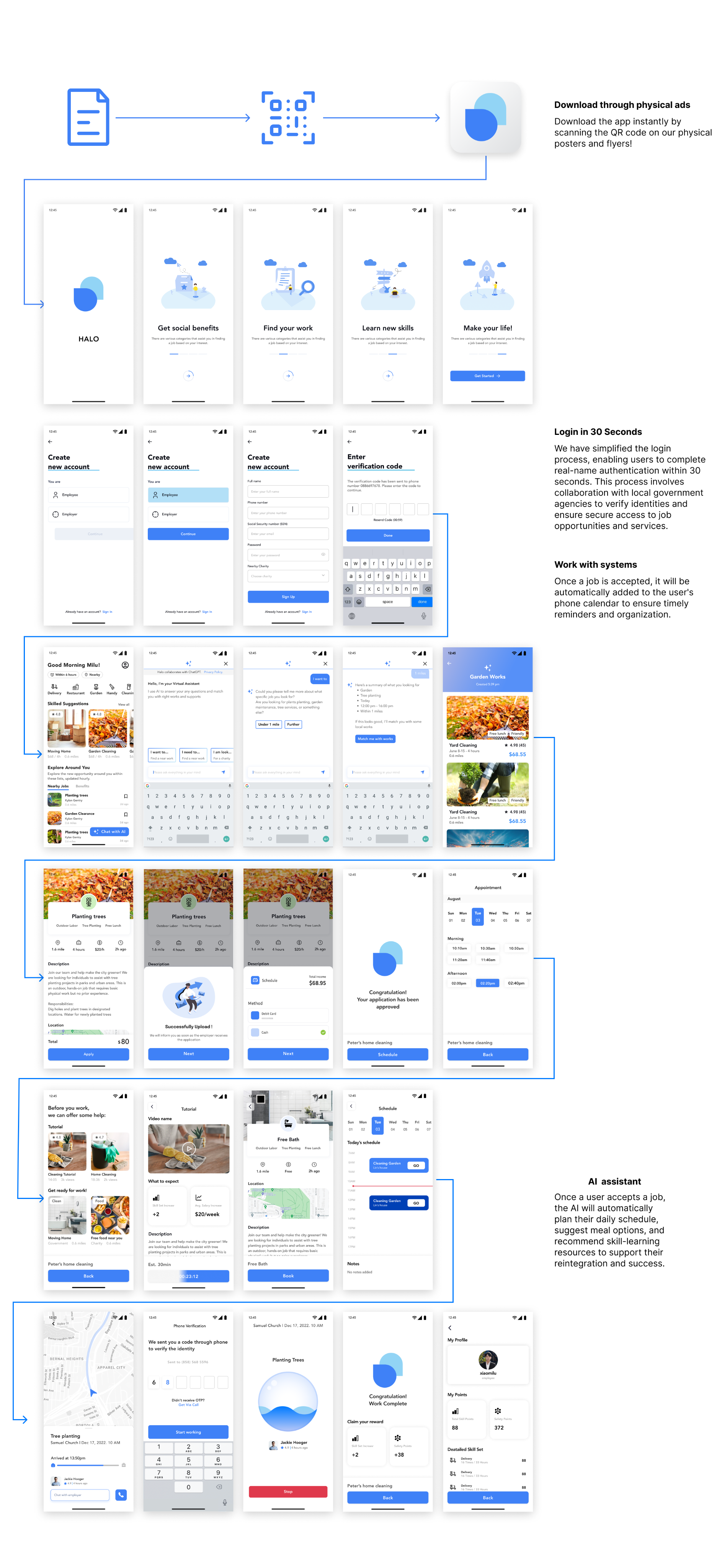
To bridge the gap in trust and accessibility, we introduced ChatGPT to establish a highly intuitive AI job matching system. Instead of forcing users to navigate complex job boards, the AI analyzes background constraints and dynamically matches individuals with the most viable, high-trust opportunities.
Optimizing Homepage Performance
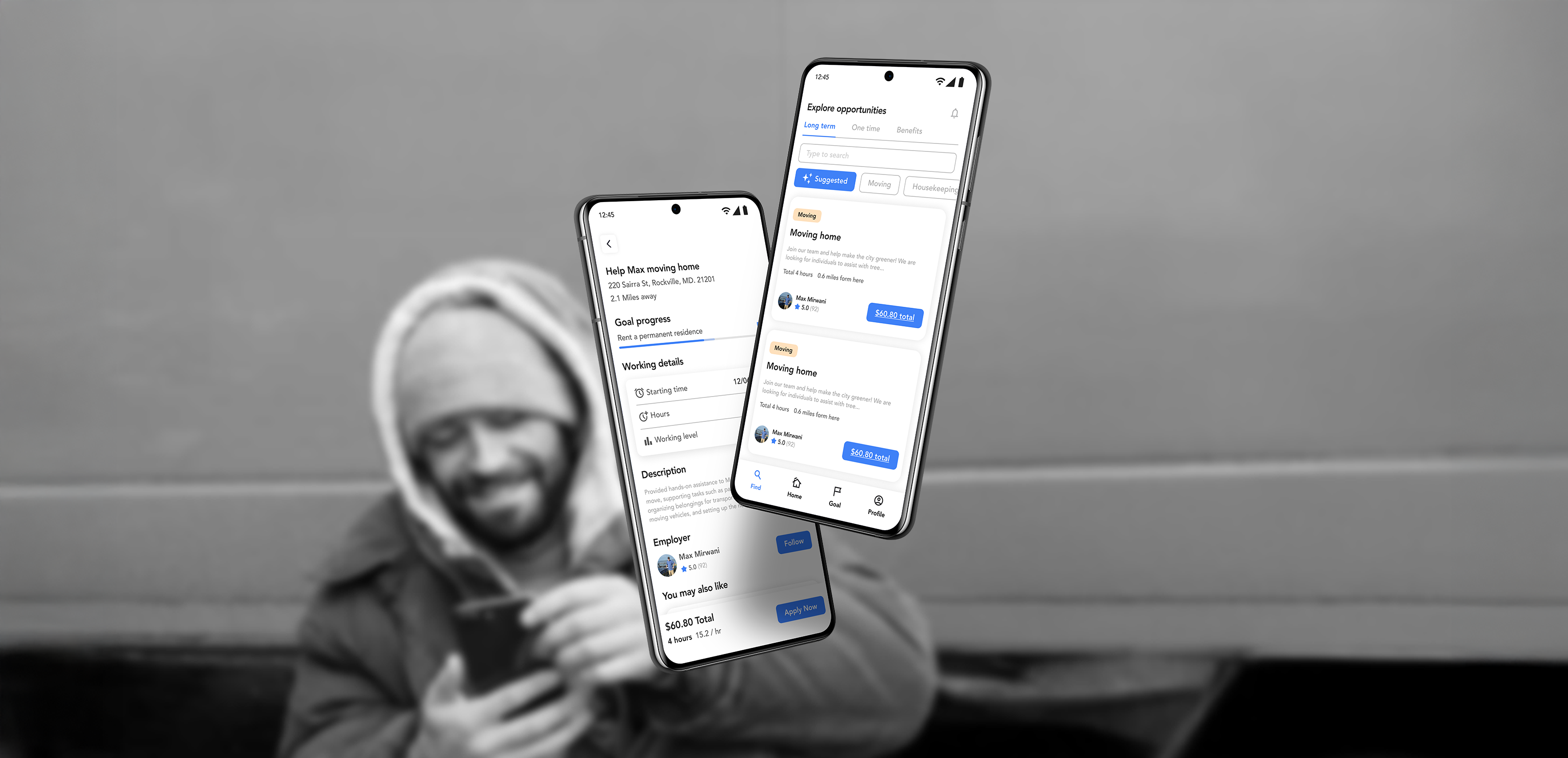
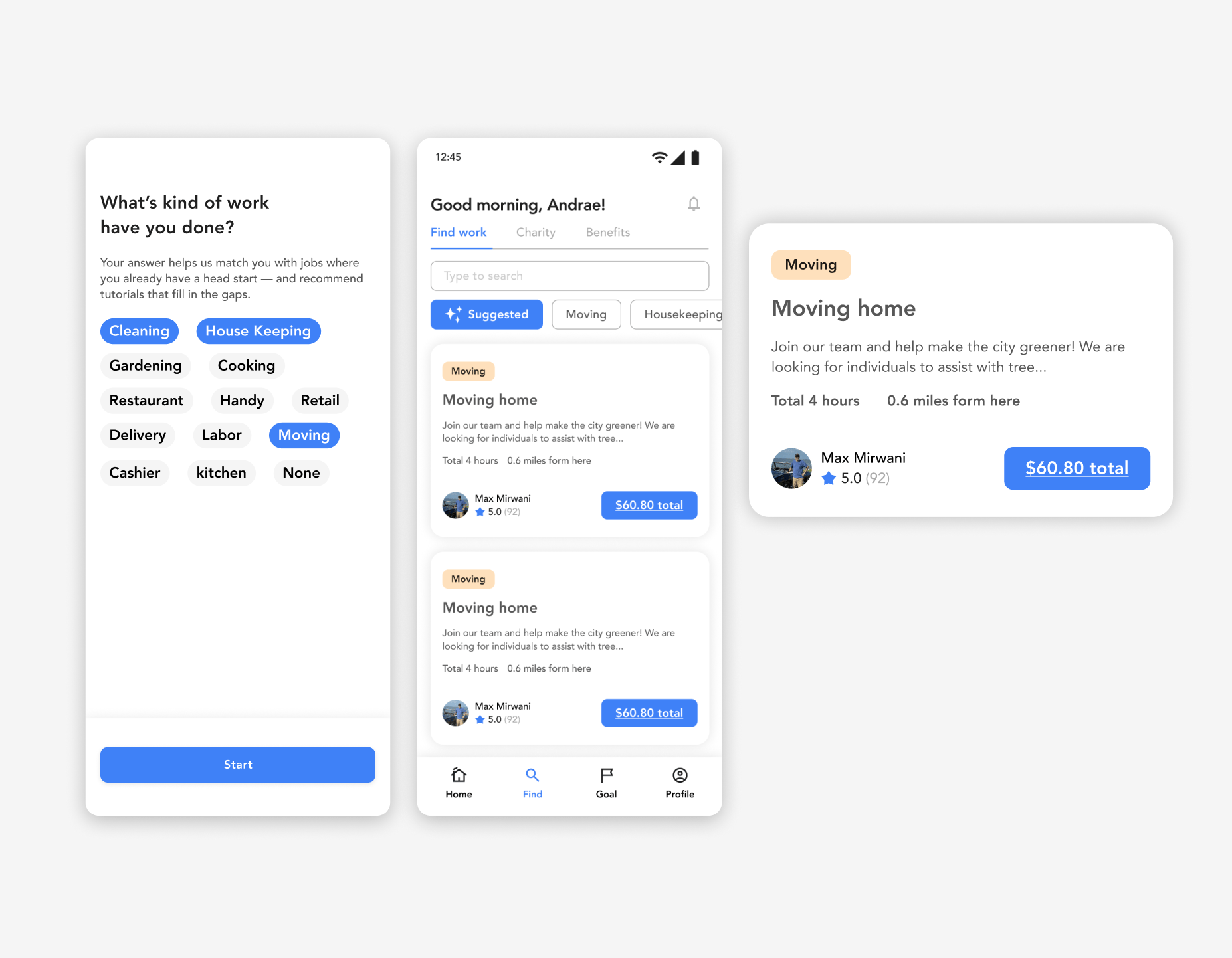
Following extensive A/B testing, we chose to streamline the homepage by removing images and other redundant elements to implement a highly focused, text-driven card interface.
Challenge 2: How do we handle security issues?
Point System
Level 1 (0 pts)
Verified by local welfare organizations; eligible for basic support and supervised group activities.
Level 2 (0–200 pts)
Assessed as having basic work capacity; can participate in supervised community or maintenance tasks for pay.
Level 3 (200+ pts)
Demonstrated reliability and experience; ready to take independent job opportunities from private employers.
Both parties must simultaneously click to start and finish the work; if either party fails to do so within 3 minutes, a confirmation call will be made to ensure safety.
Why it is a Two-Sided Rating System?
Initially, the platform only allowed employers to rate homeless workers. However, after conducting A/B testing, I found that homeless users were more concerned about whether the employer was trustworthy.
Based on this insight, I proposed a two-sided rating system, where both employers and workers can review each other. This helps users identify reliable employers and builds a more transparent and trustworthy ecosystem.
I presented this proposal to the PM and successfully pushed the feature into the product design.
The Operations Behind the Evaluation System
Trust is fragile between both sides; malicious reviews can be devastating for both parties. To address this, we implement a credit-weighted system where review impact scales with historical reliability. Furthermore, any negative feedback from new users on their first order will trigger an automatic alert for manual verification.

Challenge 3: How do we promote user motivation?
Challenges in Reintegration
At first, I believed the solution was simple—help people experiencing homelessness find jobs so they could earn money and leave homelessness.
However, through my research, I found that many face significant barriers even before job searching, such as lack of confidence, social stigma, and limited life skills.
This discovery led me to shift the direction of the project, focusing not only on job placement but also on providing step-by-step support to help users gradually rebuild stability and reintegrate into society.
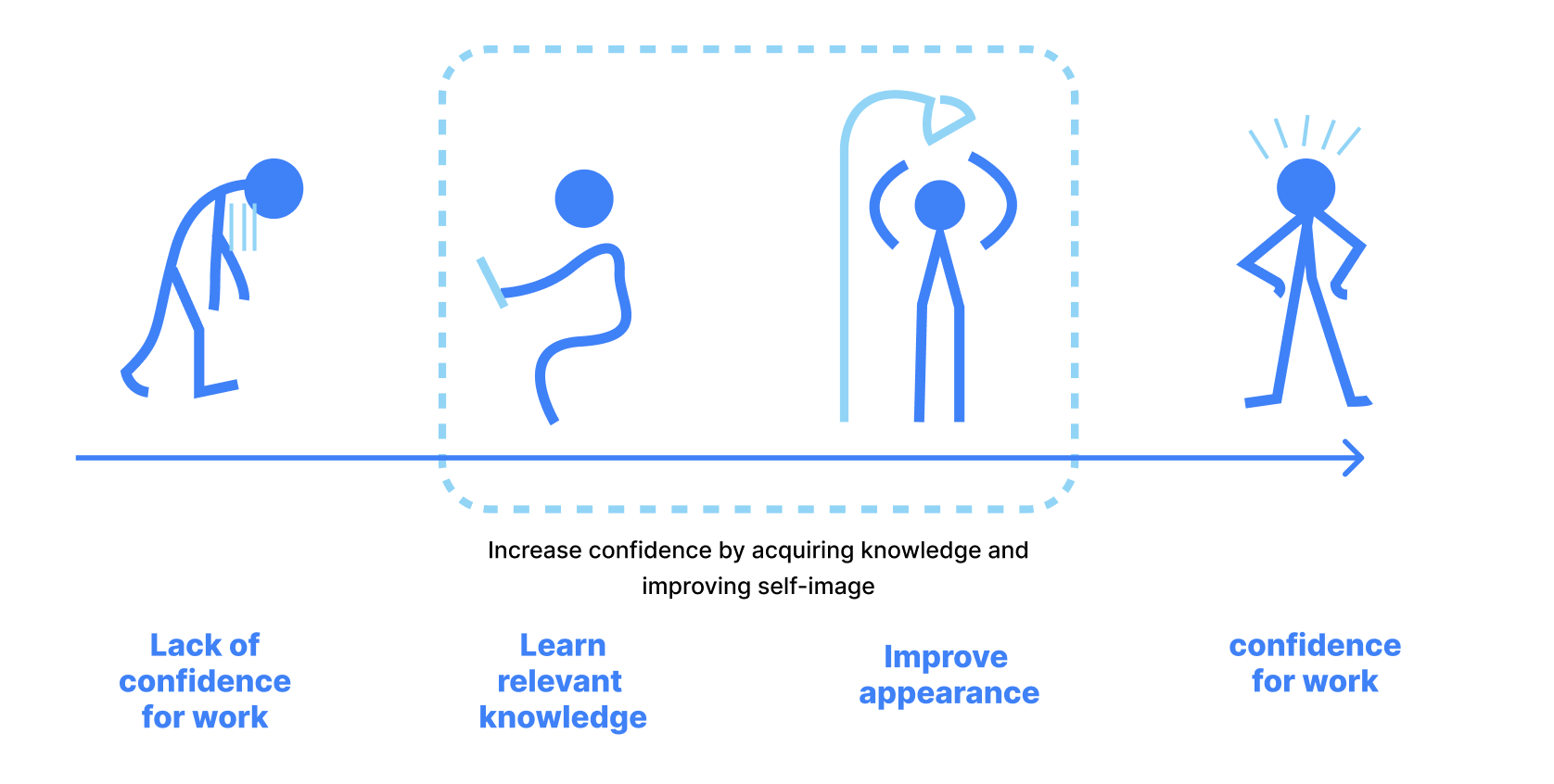
Building confidence
Once a user's application is approved, the system automatically pushes a personalized sequence of tutorial videos and resources based on their situation, starting with small, practical wins like hygiene and interview dressing, then gradually introducing job-relevant skills. Each completed video triggers a visible progress marker to reinforce momentum. Throughout, the app sends encouraging notifications that acknowledge effort. making users feel capable and prepared before they go to work.
Social Reintegration
Accumulate skills & money
Once a user's application is approved, the system automatically pushes a personalized sequence of tutorial videos and resources based on their situation — starting with small practical wins like hygiene and interview dressing, then gradually introducing job-relevant skills. Each completed video triggers a visible progress marker, and encouraging notifications acknowledge effort throughout, making users feel capable and prepared before they ever walk into an interview.
From Skills to Stability
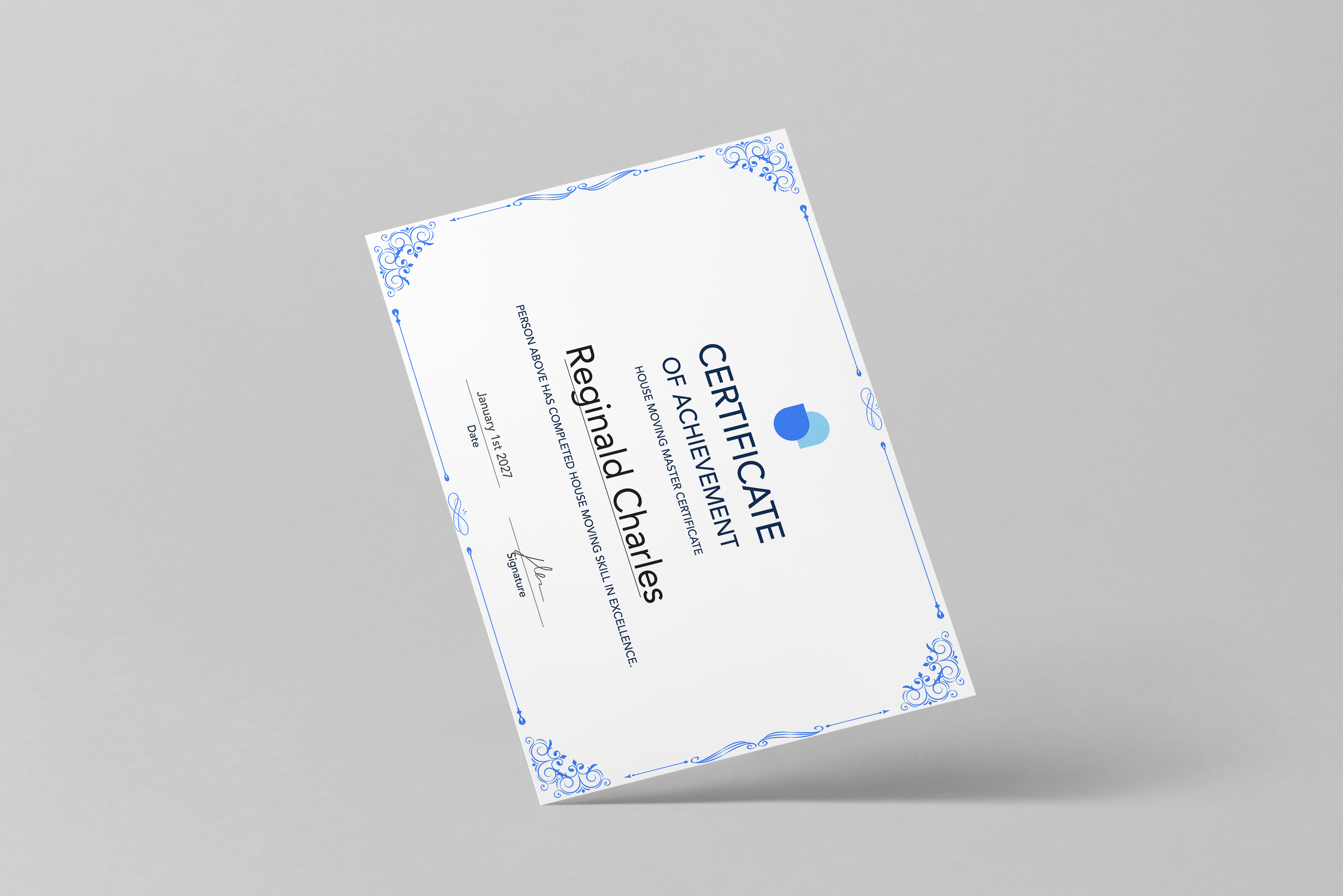
As users accumulate skills and complete milestones, the app matches them with entry-level jobs suited to what they've learned, turning progress into real income and opportunity. The journey is self-reinforcing — the more a user engages, the more doors open. Once they reach a qualifying score, the app generates a printable certificate recognizing their completed training, serving as their first professional credential and a concrete, tangible step toward long-term stable employment.
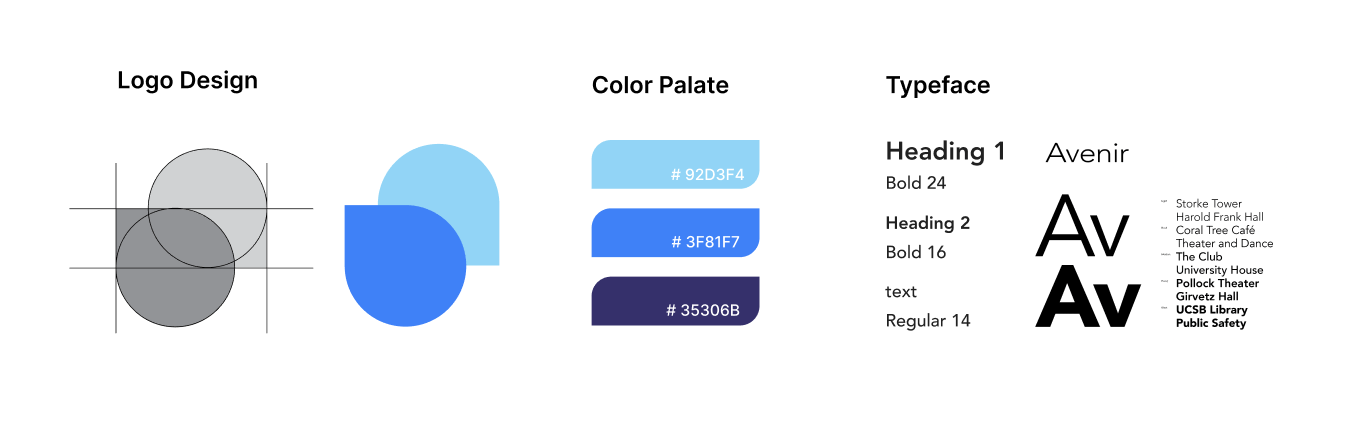
Design System
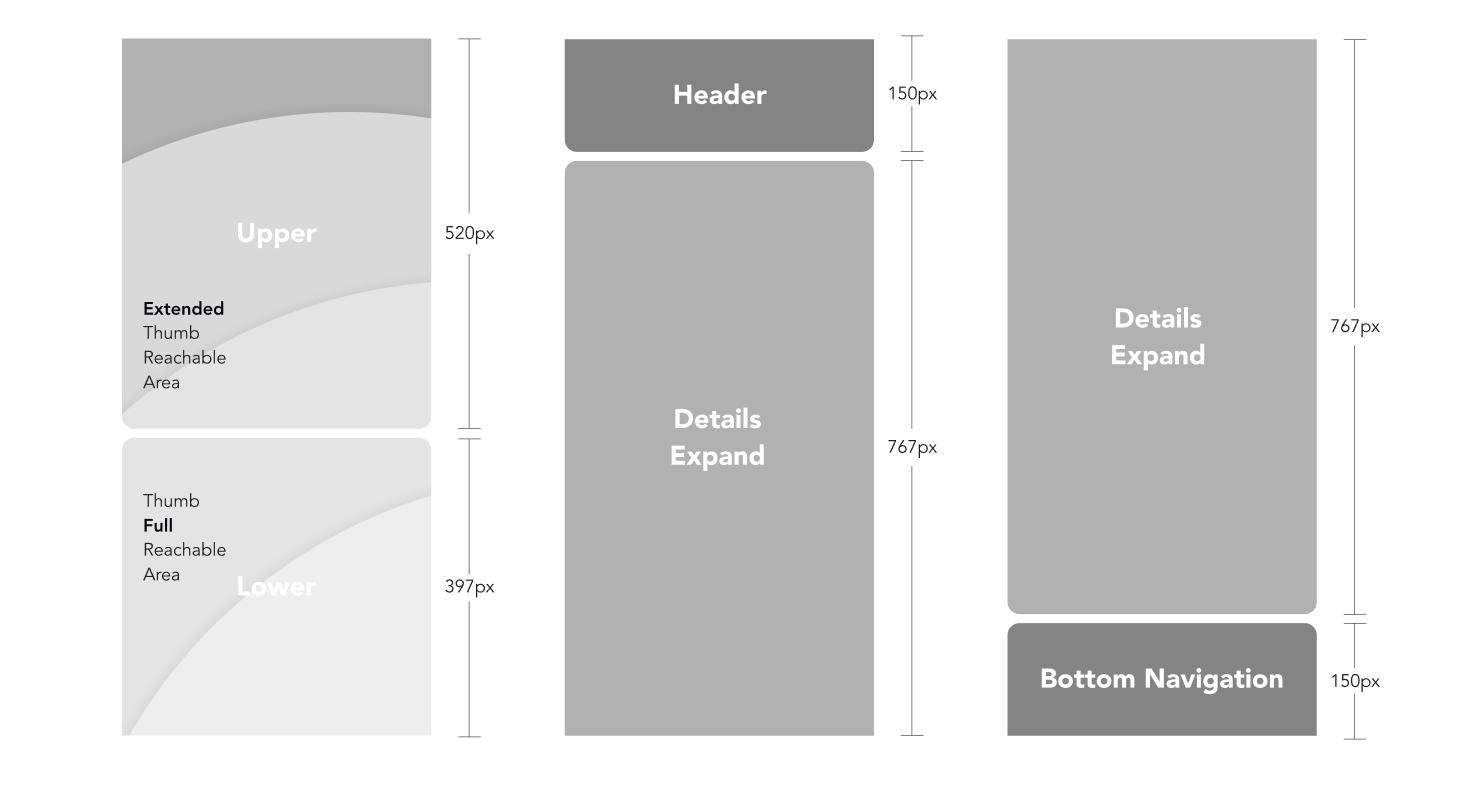
High-fidelity Prototypes
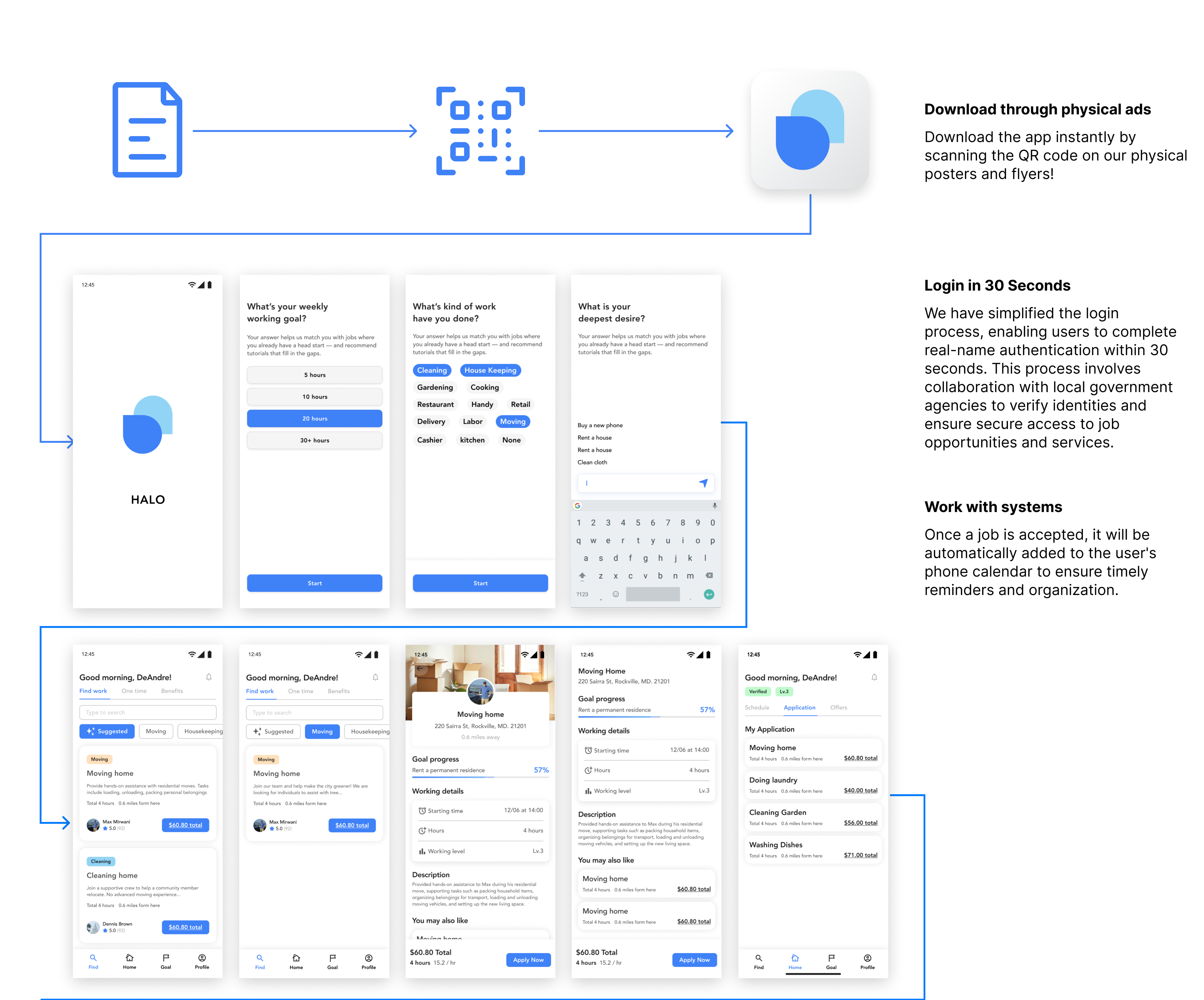
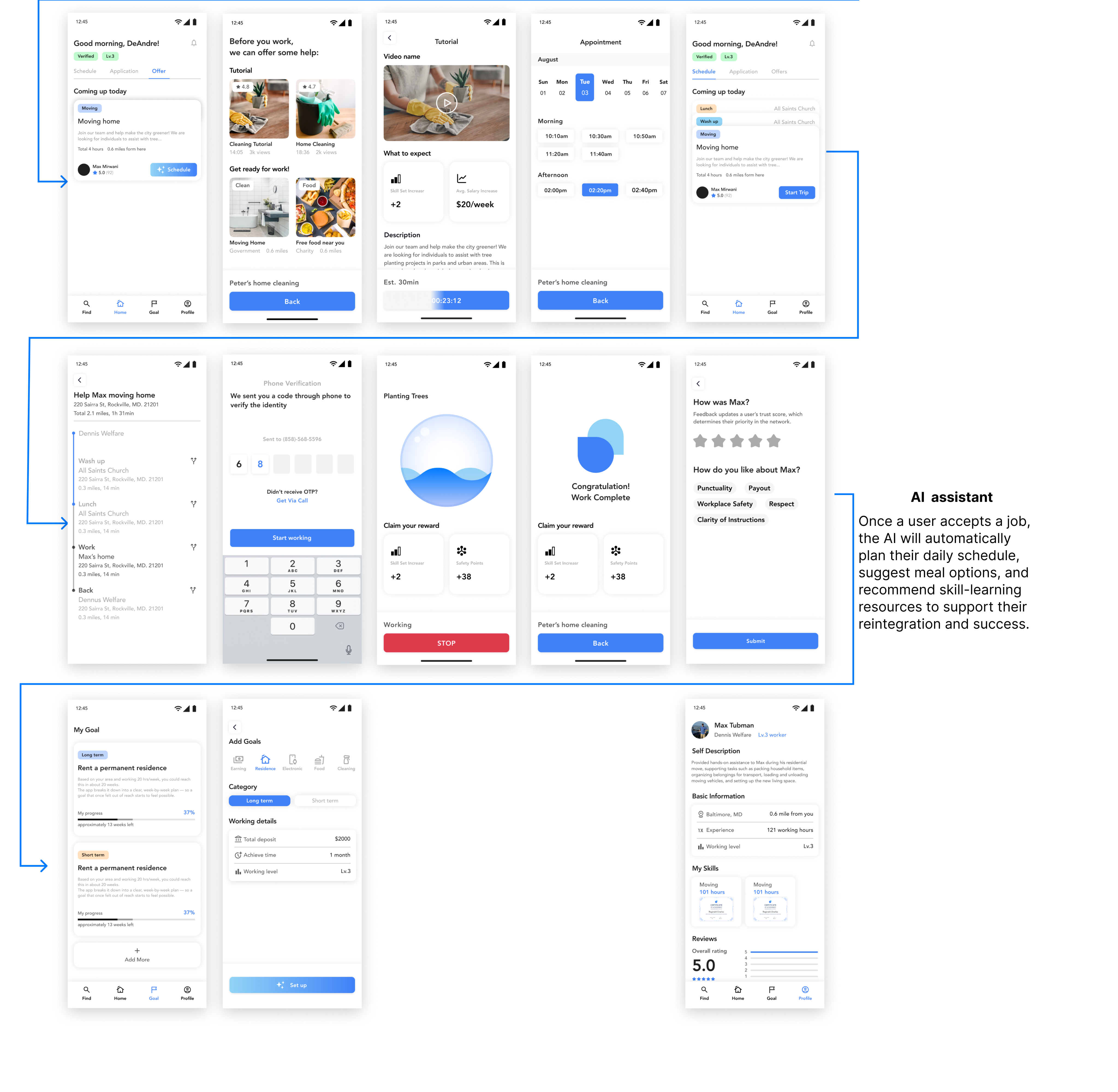
For individuals do not meet the our verification
Based on user feedback, we eliminated the custom map feature and instead leveraged the built-in mapping functionalities of mobile devices. This ensures a more seamless and familiar navigation experience while reducing technical overhead.
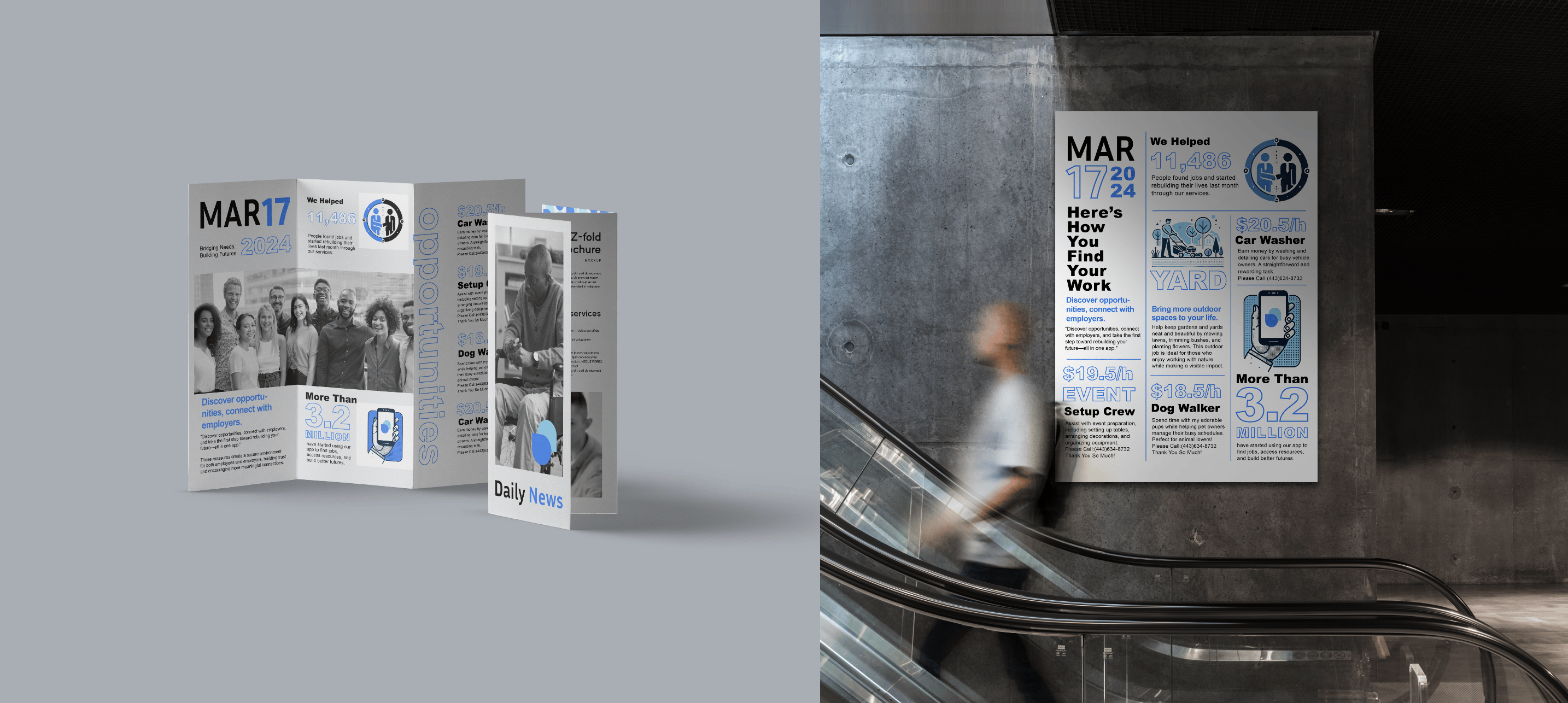
Physical Solution
Based on my previous research, a small portion of homeless individuals do not have access to mobile phones. To ensure they can still access important resources, I designed physical brochures and posters that provide essential information in an accessible and easy-to-understand format. These materials help bridge the gap and connect them with available services and opportunities.
Self Reflection
Nuanced Empathy & User Diversity
During my fieldwork, the most important concept I learned was "Grading." Among the homeless population, some individuals are eager to return to the workforce immediately, while others are grappling with mental illness or addiction. I realized that a single, uniform UI flow could not effectively serve everyone. This experience taught me how to design "tiered thresholds"—utilizing a points system to provide motivation for those who are ready, while offering a safety net for those in need of assistance. This approach affords far greater dignity than relying on a generic, one-size-fits-all template.
The Need for Government & Charity Support
No digital platform can solve homelessness in a vacuum. Halo acts as a bridge between immediate survival aid (provided by governments and charities) and long-term economic independence. By integrating with local social services, we ensure that while users build their credit on Halo, they remain supported by the essential safety nets required for a successful reintegration.